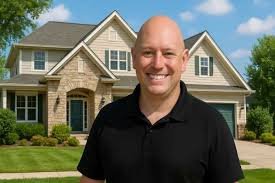
When Short Pump and Henrico County homebuyers start shopping for a mortgage, the first fork in the road is often the same: should I go with my bank, or work with a local mortgage broker? With median home prices in Short Pump running $520,000–$527,000, this decision carries real financial weight. We’re talking thousands of dollars over the life of your loan, not hundreds.
Banks offer familiarity. Large online lenders offer convenience. But neither automatically offers the best rate, the most flexible programs, or the local expertise that a Short Pump purchase demands. Whether you’re buying near Short Pump Town Center, financing a home in the Deep Run school zone, or using down payment assistance to get into West Broad Village, the lender you choose shapes your entire experience from pre-approval to closing table.
This article lays out seven concrete strategies to help you evaluate your options, understand the structural differences between brokers and retail lenders, and make the right call for your specific financial profile.
Written by Duane Buziak, NMLS #1110647 | Coast2Coast Mortgage LLC NMLS #376205 | Independent Mortgage Broker, Short Pump VA
1. Compare Access to Lenders, Not Just Rates
The Challenge It Solves
Most buyers start their mortgage search by asking “who has the lowest rate?” That’s the wrong first question. Before you can compare rates meaningfully, you need to understand who each lender is actually shopping for you. A rate quote is only as good as the lender shelf behind it.
The Strategy Explained
Here’s the structural reality: a retail bank or online lender can only offer you their own loan products. Rocket Mortgage quotes Rocket rates. Movement Mortgage quotes Movement rates. Sparrow Home Loans, affiliated with Atlantic Bay, quotes Atlantic Bay rates. C&F Mortgage (Valerie Holbrook, NMLS #1551139) quotes C&F rates. Each of these is a single-shelf operation.
An independent mortgage broker operates differently. At Short Pump Mortgage, access to 500+ wholesale lenders means your loan is shopped across the market simultaneously. Wholesale pricing is structurally lower than retail because the lender isn’t paying for branch overhead, national advertising, or a commissioned loan officer at a retail institution. That pricing advantage gets passed to you.
This is why lender access is the first filter, not the rate headline. If a lender can only offer you one shelf of products, you’re not getting comparison shopping. You’re getting a single quote dressed up as a market rate.
Implementation Steps
1. Ask every lender candidate directly: “How many investors or lenders do you have access to?” A bank or retail lender will typically name one. A broker should be able to name dozens.
2. Ask whether their pricing is retail or wholesale. Retail lenders build their margin into the rate. Wholesale brokers earn a flat origination fee and pass the lower wholesale rate to the borrower.
3. Use the NoTouch Credit Pull (soft pull pre-approval) to get quotes from multiple sources without triggering multiple hard inquiries on your credit report. This makes real comparison shopping safe and practical.
Pro Tips
Don’t confuse brand recognition with market access. The most advertised lender is often the most expensive. The lender with the widest wholesale shelf access is almost always the better starting point for a $494,000+ loan in Henrico County.
2. Run the Real Dollar Math Before You Commit
The Challenge It Solves
Rate differences that sound small in conversation are enormous over 30 years. A 0.375% rate difference on a Short Pump purchase loan isn’t a rounding error. It’s a car payment every month for three decades. Most buyers don’t run the actual numbers until it’s too late to switch lenders.
The Strategy Explained
Let’s use Short Pump’s current median price as the baseline. At $520,000 with a 5% down payment, your loan amount is $494,000. Here’s what the math looks like across two rate scenarios on a 30-year fixed:
Retail Bank Scenario: 6.75%
Monthly principal and interest payment: approximately $3,204. Total interest paid over 30 years: approximately $660,440.
Wholesale Broker Scenario: 6.375%
Monthly principal and interest payment: approximately $3,083. Total interest paid over 30 years: approximately $615,000.
The Gap: Approximately $121 per month in savings. Approximately $43,000–$45,000 in total interest savings over the life of the loan. That’s not a small difference. That’s a meaningful portion of a college education, a home renovation, or a decade of retirement contributions.
Note: These figures are based on standard amortization calculations. Actual rates vary by credit profile, loan type, and market conditions at time of application. Always verify with a current mortgage calculator and request a formal Loan Estimate.
Implementation Steps
1. Calculate your actual loan amount using your target purchase price minus your down payment. For most Short Pump buyers, that lands between $450,000 and $700,000.
2. Run both scenarios through a mortgage amortization calculator using the rates you’re quoted. Look at total interest paid over 30 years, not just the monthly payment.
3. Factor in points and origination fees. A lower rate with two discount points may cost more upfront than a slightly higher rate with no points, depending on how long you plan to stay in the home.
Pro Tips
In a market where the median home price is $520,000+, rate precision matters more than in lower-cost markets. A 0.25% difference that might mean $40/month on a $250,000 loan means nearly $80/month on a $494,000 loan. The math scales with the loan amount.
3. Match the Loan Program to Your Actual Financial Profile
The Challenge It Solves
Not every lender can serve every borrower. Banks and retail lenders typically offer a narrow product set optimized for the most straightforward borrower profiles. If your financial picture is anything other than W-2 income, 20% down, and a 740+ credit score, a single-shelf lender may not be able to help you at all.
The Strategy Explained
The right loan program depends on your income type, credit score, down payment, military status, and the property itself. Here’s how to think through it:
W-2 Employees with Strong Credit: Conventional or FHA depending on down payment and FICO. The FHFA 2026 conforming loan limit for Henrico County is $806,500 for a single-family home, meaning most Short Pump purchases fall within conventional loan territory without going jumbo.
Veterans and Active Military: VA loans offer zero down payment, no PMI, and competitive rates. Short Pump Mortgage offers VA financing down to 500 FICO — a threshold most retail banks and online lenders cannot match.
Self-Employed Borrowers: Bank Statement loans and DSCR loans serve borrowers whose tax returns don’t reflect their actual income. These are non-QM programs that most retail banks do not offer at all.
Buyers with Limited Down Payment: Dynamo DPA and Turbo DPA programs can cover down payment and closing costs for qualifying buyers. USDA loans offer zero down payment for eligible rural and suburban properties.
ITIN and Foreign National Borrowers: Specialized non-QM programs exist for buyers without a Social Security number. These are not available at most retail institutions.
Implementation Steps
1. Identify your income documentation type: W-2, self-employed, rental income, or asset-based.
2. Check your VA eligibility if you have any military service history. Even a partial entitlement can open the VA loan option.
3. Ask your broker specifically which programs you qualify for based on your FICO score, income type, and down payment. A broker with wholesale access can often find a qualifying program when a retail lender cannot.
Pro Tips
If a retail lender tells you that you don’t qualify, that’s often a statement about their product shelf, not your actual eligibility. A second opinion from a wholesale broker frequently reveals options the first lender simply didn’t have access to.
4. Use a Soft Pull Pre-Approval to Shop Without Credit Damage
The Challenge It Solves
Most buyers don’t realize that shopping for a mortgage can hurt their credit score if they’re not careful. Every hard inquiry from a lender can drop your score by a few points. Multiple hard inquiries in a short window can compound that impact, which ironically makes you look like a higher-risk borrower at the exact moment you’re trying to get your best rate.
The Strategy Explained
The NoTouch Credit Pull changes the math entirely. A soft credit pull mortgage pre-approval reviews your credit profile without triggering a hard inquiry on your report. Your score is not impacted. You get a real pre-approval based on actual credit data, not a vague pre-qualification based on self-reported information.
This matters because most retail banks and large online lenders require a hard inquiry before they’ll even quote you a rate. That means the moment you apply to compare, you’ve already paid a credit cost. With a no hard inquiry mortgage pre-approval through Short Pump Mortgage, you can get your baseline established, understand your program options, and enter the market with confidence before any hard pull is required.
The mortgage pre-approval without hard pull approach also gives you leverage. Once you know your rate, program, and payment, you can approach other lenders from a position of knowledge rather than desperation. If a retail lender wants to match or beat the wholesale quote, they can earn the hard inquiry. If they can’t, you haven’t lost anything.
Implementation Steps
1. Request a soft pull mortgage broker pre-approval as your first step, before contacting any bank or retail lender.
2. Use the pre-approval letter to make offers in competitive Short Pump neighborhoods. A real pre-approval carries more weight with listing agents than a vague pre-qualification letter.
3. Consolidate any hard inquiries into a short window (typically 14–45 days depending on the scoring model) if you do shop multiple lenders. Credit bureaus typically treat multiple mortgage inquiries within that window as a single inquiry for scoring purposes.
4. Use a no credit hit mortgage application as your entry point to understand your options before committing to any specific lender or program.
Pro Tips
The NoTouch Credit Pull is available through Short Pump Mortgage at no cost and no obligation. It’s the single most buyer-friendly tool in the mortgage process, and it’s one that most retail lenders and banks simply don’t offer as a standard option.
5. Evaluate Closing Speed and Local Market Knowledge
The Challenge It Solves
Short Pump and Henrico County are competitive markets. Homes in the Deep Run school zone, near Nuckols Farm Elementary, and around West Broad Village frequently attract multiple offers. A lender who can’t close in 21–30 days, or who doesn’t understand local appraisal dynamics, can cost you a contract even when you’re the highest bidder.
The Strategy Explained
Large retail banks and national online lenders typically use centralized underwriting teams located far from Virginia. They may have limited familiarity with Henrico County appraisal comps, local title companies, VHDA program nuances, or the specific documentation requirements that come up in Short Pump transactions.
A local broker who closes regularly in Henrico County knows which appraisers work the area, which title companies move quickly, and how to structure a file so it clears underwriting without unnecessary delays. That local knowledge is not something you can find in a rate quote comparison. It only shows up at the closing table, or when a deal falls apart because the lender missed a local requirement.
Closing speed is also a negotiating tool. Sellers in competitive Short Pump neighborhoods often favor buyers with faster, more certain closings. A pre-underwritten file from a local broker can be more attractive than a higher offer from a buyer using a slow national lender.
Implementation Steps
1. Ask every lender candidate: “What is your average closing time for a purchase in Henrico County?” A local broker should be able to give you a specific, recent answer.
2. Ask whether underwriting is done locally or through a centralized national team. Local underwriting typically means faster turnaround and better communication.
3. Ask whether the lender has experience with VHDA programs if you’re considering state-level down payment assistance. Not every lender is approved or familiar with Virginia Housing programs.
4. Ask for references from recent Henrico County closings. A lender who closes regularly in your target market should be able to provide them.
Pro Tips
In a multiple-offer situation, your pre-approval letter is only as strong as the lender behind it. Listing agents and sellers’ agents talk to each other. A letter from a known, respected local broker often carries more weight than a letter from a national brand the listing agent has had problems with before.
6. Understand Fee Structures — Origination, Points, and No-Out-of-Pocket Options
The Challenge It Solves
Rate comparisons without fee comparisons are incomplete and often misleading. A lender can quote you a lower rate while burying thousands of dollars in origination charges, discount points, or junk fees in Section A of the Loan Estimate. Without reading the full LE, you may be comparing apples to oranges without knowing it.
The Strategy Explained
The CFPB’s Loan Estimate is the standardized document that every lender must provide within three business days of receiving a complete application. Section A lists origination charges, including any discount points and lender fees. This is the most important section for comparison shopping because it’s where lenders hide their margin.
A discount point is prepaid interest. One point equals 1% of the loan amount. On a $494,000 loan, one point is $4,940 paid upfront to buy down the rate. Whether that’s worth it depends entirely on how long you plan to stay in the home. If a lender is quoting you a lower rate but charging two points to get there, the effective cost may be higher than a slightly higher rate with no points.
On the subject of CapCenter: they market no-closing-cost conventional loans aggressively in the Richmond market. What that typically means is that closing costs are rolled into the rate rather than paid upfront. For a conventional borrower with strong credit and a large down payment, that can be a reasonable trade. But for FHA, VA, and USDA borrowers, wholesale broker pricing through Short Pump Mortgage typically results in lower total cost, because the rate advantage at the wholesale level more than offsets any lender credit structure. The language to watch for: “no-out-of-pocket closing options” is a real thing on FHA, VA, and USDA loans through a wholesale broker. It’s not the same as rolling costs into a higher retail rate.
Implementation Steps
1. Request a Loan Estimate from every lender you’re seriously considering. Do not compare rate quotes on paper alone.
2. Compare Section A (origination charges) across all Loan Estimates. This is the lender’s fee. It should be transparent and explainable.
3. Calculate the break-even on any discount points. Divide the upfront cost by the monthly savings to find out how many months it takes to recoup the cost. If you plan to sell or refinance before that break-even, don’t buy the points.
4. Ask about no-out-of-pocket closing options specifically if you’re using FHA, VA, or USDA. Lender credits can cover closing costs without adding points to the rate in the same way retail lenders structure it.
Pro Tips
The Annual Percentage Rate (APR) accounts for fees as well as the interest rate, making it a better comparison tool than the rate alone. But even APR has limitations. The Loan Estimate comparison is the gold standard. Use it.
7. Know When a Bank Relationship Actually Helps — And When It Doesn’t
The Challenge It Solves
This isn’t about bashing banks. There are situations where a banking relationship adds genuine value. But there are also situations where loyalty to your bank is costing you real money, and most buyers don’t know the difference until after they’ve signed the closing documents.
The Strategy Explained
Bank relationships tend to add value in a narrow set of circumstances: high-deposit conventional borrowers who qualify for relationship pricing, buyers with complex private banking needs, or borrowers whose financial picture is so clean and straightforward that any lender can serve them at competitive pricing. In those cases, a rate match from your bank plus the convenience of an existing relationship may be worth it.
Bank relationships add little or no value for FHA borrowers, VA borrowers (especially those with FICO scores below 640), buyers using down payment assistance programs, self-employed borrowers needing bank statement or non-QM loans, ITIN borrowers, and DSCR investors. These are programs that retail banks either don’t offer or can’t price competitively because they’re sourcing them at retail rather than wholesale.
Rocket Mortgage and Movement Mortgage are retail lenders. They set their own rates. They cannot access wholesale pricing. They cannot offer the same rate a wholesale broker can get from the same underlying investor. That’s not an opinion. It’s a structural fact about how the mortgage market is organized. Retail lenders build their margin into the rate. Wholesale brokers earn a disclosed origination fee and pass the lower rate to the borrower.
The practical strategy: get a wholesale broker quote first. Use it as your baseline. Then approach your bank if you want to give them a chance to compete. If they can match or beat the total cost on the Loan Estimate, take it. If they can’t, you have your answer without having committed to anything.
Implementation Steps
1. Get your NoTouch Credit Pull soft pull pre-approval and wholesale rate quote before contacting your bank.
2. Bring the Loan Estimate from the broker to your bank and ask them to match it line by line, not just the rate.
3. If your loan is FHA, VA, USDA, or involves any non-QM program or down payment assistance, skip the bank step entirely. They almost certainly cannot match wholesale pricing on those products.
4. If your bank offers relationship pricing tied to a deposit account, quantify the actual discount. Sometimes it’s meaningful. Often it’s a fraction of what wholesale pricing delivers.
Pro Tips
Loyalty is a reasonable starting point, but it’s not a mortgage strategy. The lender who serves you best on a $494,000 loan in Short Pump is the one who can access the most lenders, offer the most programs, and deliver the lowest total cost on the Loan Estimate. Let the math decide.
Local Mortgage Broker vs. Bank vs. Online Lender: Side-by-Side Comparison
| Feature | Short Pump Mortgage (Duane Buziak) | Retail Bank | Large Online Lender (e.g., Rocket Mortgage) |
|---|---|---|---|
| Lender Access | 500+ wholesale lenders | Single shelf (bank’s own products) | Single shelf (retail products only) |
| Rate Source | Wholesale pricing (lower cost basis) | Retail pricing (margin built in) | Retail pricing (margin built in) |
| Soft Pull Available | Yes — NoTouch Credit Pull standard | Rarely offered | Not standard; hard pull typically required |
| FHA / VA / USDA Programs | All three at wholesale pricing | FHA/VA sometimes; USDA limited | FHA/VA at retail pricing; USDA limited |
| DPA Programs | Dynamo DPA + Turbo DPA available | Limited or none | Limited or none |
| Local Market Knowledge | Deep — Henrico County specialist | Varies by branch location | Centralized; limited local expertise |
| VA FICO Floor | 500 FICO | Typically 620+ | Typically 620+ |
| Avg. Closing Speed | 21–30 days typical | 30–45 days typical | 30–45 days; varies widely |
| Origination Fee Structure | Disclosed flat broker fee; wholesale rate passed through | Margin embedded in rate; fees vary | Margin embedded in rate; origination fees apply |
Frequently Asked Questions: Local Mortgage Lenders vs. Banks in Short Pump VA
1. What is the difference between a local mortgage broker and a bank in Short Pump VA?
A local mortgage broker shops 500+ wholesale lenders to find the lowest rate for your specific profile, while a bank can only offer its own loan products at retail pricing. Brokers disclose their fee separately; banks embed their margin in the rate, making direct comparison harder without a Loan Estimate.
2. Can I get a mortgage in Short Pump without a hard credit inquiry?
Yes. Duane Buziak at Short Pump Mortgage offers a NoTouch Credit Pull soft pull pre-approval that does not impact your credit score. This no hard inquiry mortgage pre-approval gives you a real pre-approval based on actual credit data, without the score impact of a traditional hard pull.
3. Do local mortgage brokers charge higher fees than banks in Henrico County?
Not typically. Wholesale broker pricing often results in lower total costs than retail bank pricing, especially on FHA, VA, and USDA loans. The broker’s origination fee is disclosed separately on the Loan Estimate and is often offset or exceeded by the rate savings from wholesale pricing.
4. What is the 2026 conforming loan limit for Henrico County VA?
The FHFA 2026 conforming loan limit for Henrico County is $806,500 for a single-family home. Loans above this threshold require jumbo financing. Most Short Pump purchases at the $520,000–$527,000 median price fall comfortably within conventional loan limits.
5. Can I get a VA loan through a local broker in Short Pump with a low credit score?
Yes. Short Pump Mortgage offers VA loans down to 500 FICO, which most retail banks and online lenders do not. The VA does not set a minimum credit score, but most retail lenders impose their own overlays at 620 or higher. A wholesale broker with flexible investor access can often go lower.
6. Is Rocket Mortgage or a local Short Pump broker better for FHA loans?
A local independent broker like Short Pump Mortgage typically offers lower FHA rates because wholesale pricing is not available to retail lenders like Rocket Mortgage. Rocket sets its own rates at retail; a wholesale broker passes the lower wholesale rate directly to the borrower with a disclosed flat fee.
7. What down payment assistance programs are available to Short Pump homebuyers?
Dynamo DPA and Turbo DPA are available through Short Pump Mortgage for qualifying buyers. Eligibility varies by income, purchase price, and loan type. USDA zero-down financing is also available for eligible properties in qualifying suburban areas. Contact Short Pump Mortgage for a current eligibility review.
8. How does Short Pump Mortgage compare to CapCenter on closing costs?
CapCenter markets no-closing-cost conventional loans in the Richmond market, which typically means closing costs are rolled into a higher rate rather than paid upfront. Short Pump Mortgage offers no-out-of-pocket closing options on FHA, VA, and USDA loans through lender credits at wholesale pricing, and typically wins on total cost for those loan types because the wholesale rate advantage is structural.
Your Implementation Roadmap
Here’s how to put these seven strategies into a logical sequence for your Short Pump home purchase.
Start with a NoTouch Credit Pull soft pull pre-approval to establish your baseline without credit score impact. This is step one, before you contact any bank or retail lender. Know your rate, your program options, and your payment before you walk into anyone else’s office.
Then run the dollar math using real loan amounts. Short Pump’s $520,000+ median price means rate precision matters more here than in lower-cost markets. A 0.375% rate difference on a $494,000 loan is not a rounding error. It’s $43,000–$45,000 over 30 years.
Match your program to your financial profile before choosing a lender type. If you’re a veteran, self-employed, or using down payment assistance, the program question narrows your lender options significantly. Not every lender can serve every profile.
Always request the Loan Estimate to compare total costs, not just the rate headline. Section A origination charges are where the real comparison happens. Use the CFPB’s Loan Estimate guide to understand every line before signing anything.
If you’re buying near Short Pump Town Center, West Broad Village, or anywhere in the Deep Run or Nuckols Farm school zones, local expertise and closing speed are part of the value equation. The lender who knows Henrico County closes faster and with fewer surprises.
Ready to find the right mortgage for your Short Pump home? Connect with our local mortgage experts today for a no-obligation soft pull pre-approval, a real rate quote, and access to 500+ wholesale lenders competing for your business. Call (804) 212-8663 or visit ShortPumpMortgage.com.