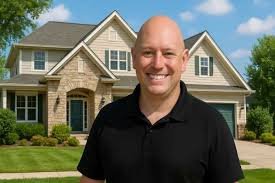
Are USDA homes near Richmond? Yes. The better question is whether the specific address you want qualifies. USDA financing is not limited to farmland or remote properties. Around Richmond, eligible pockets can begin sooner than buyers expect, especially once you move beyond the dense West End and central Henrico corridors.
For a buyer priced out of a $520,000-plus Short Pump home but open to more space in Goochland, Hanover, New Kent, Powhatan, or the outer edges of Henrico County, USDA can be one of the strongest paths to homeownership: zero down for an eligible primary residence. Before you spend weekends touring homes, I can run a NoTouch Credit Pull and check the property area. That means a soft pull pre-approval with no hard inquiry and no credit hit.
Where Are USDA Homes Near Richmond?
Most of the City of Richmond and the built-up sections around Short Pump, Innsbrook, West Broad Village, Green Gate, and central Glen Allen are generally not USDA-eligible. Those areas have the population density USDA financing is designed to avoid.
But the map changes quickly as you head outward. Buyers often find eligible homes in parts of Goochland County, including areas beyond the Manakin Sabot corridor; in Hanover County outside its more developed communities; across New Kent County; and in Powhatan and other Richmond-area communities with a more rural or suburban character. Some outer Henrico locations can also be worth checking, but no one should assume eligibility based on a ZIP code or a county line.
USDA determines eligibility by the exact property address, not by how a listing describes the neighborhood. A home marketed as “Glen Allen” may fall inside or outside the approved area. A property just a few miles farther west could qualify. That is why checking the address before writing an offer matters.
The house has to qualify too
USDA loans are for owner-occupied primary homes. They are not for a second home, vacation property, or investment purchase. The property also must meet appraisal and condition requirements. A well-maintained resale home, a new construction property, or a qualifying manufactured home may work, but the appraisal has to support both value and basic property standards.
A large acreage parcel, an income-producing farm setup, or a home with unusual commercial use can require a closer review. USDA is built for a residence, not a business-purpose purchase with a house attached.
Why USDA Is Worth Checking Before FHA or Conventional
The headline benefit is straightforward: USDA can offer 100% financing for qualified buyers. No down payment is required. For many first-time buyers, that can preserve savings for moving expenses, reserves, and the normal surprises that come with owning a home.
Consider a $400,000 eligible home outside the immediate Short Pump market. A conventional loan with 3% down requires $12,000 before addressing closing costs and prepaid items. FHA requires 3.5% down, or $14,000. A USDA loan can remove that down-payment hurdle altogether for a qualified buyer.
That does not mean USDA is automatically the best choice every time. USDA has household-income limits, property-location rules, and an upfront guarantee fee plus an annual fee. Conventional financing may be more flexible for a buyer whose household income exceeds the USDA cap, while FHA can be a better fit for an address closer to Richmond that does not qualify geographically.
The right comparison is not just “which loan has the smallest down payment?” It is which approved program produces the best payment, cash-to-close number, and long-term cost for your actual home and financial profile.
USDA Income Rules Can Surprise Buyers
USDA looks at household income, which can be broader than the income used to qualify for the mortgage payment. Income from adults living in the home may count even if they are not borrowers on the loan. The program also adjusts limits by county and household size, with certain deductions potentially available.
That is where an early conversation saves time. A buyer may have strong credit and stable employment but still be above the USDA income limit. Another buyer who assumes they earn too much may remain eligible after the complete household review.
I do not use a generic online calculator as the final answer. I review the household details, the property address, and the loan scenario before telling a buyer whether USDA is a realistic route. If it is not, we can compare FHA with 3.5% down, conventional options, and available down-payment assistance programs such as Dynamo DPA or Turbo DPA where they fit.
Credit: Start With a NoTouch Credit Pull
Many buyers delay asking about USDA because they are protecting their credit score. That concern is valid. You should not have to take a hard inquiry just to learn whether an address is eligible or whether your estimated payment makes sense.
My process starts with a NoTouch Credit Pull, a no-credit-hit pre-approval designed to give us a working view of your credit profile without a hard pull. It is a soft credit check, not an inquiry that appears as a hard inquiry on your report. You get useful answers first: likely buying power, payment ranges, potential program fit, and the credit items that may need explanation.
Once you identify the right home and are ready to move forward, the formal loan process requires the appropriate credit and underwriting steps. But there is no reason to begin there before you have a plan. For a buyer comparing a USDA-eligible home in Goochland with a conventional option near Deep Run High School, that initial soft pull can keep the search focused without adding a credit hit.
A Local USDA Search Should Start With the Map and the Math
The strongest USDA search is not “find me a rural house.” It is a targeted search built around commute, school preferences, land, budget, and eligibility. A buyer working near West Broad Street may decide that a 25- to 35-minute commute is worth it for a newer home, more yard, and no required down payment. Another buyer may decide that being close to Short Pump Town Center matters more and choose FHA or conventional financing instead.
Before touring, get three numbers in place: your realistic payment range, your cash-to-close estimate, and your USDA household-income status. Then screen potential addresses for USDA eligibility as listings appear. This prevents the common frustration of falling in love with a property only to discover it is outside the approved area.
Closing costs still exist with USDA, even though the down payment may be zero. Depending on the transaction and appraisal, seller contributions or no-out-of-pocket closing options may be available. Those details need to be structured correctly rather than assumed from a listing advertisement.
Broker Access Matters When You Compare Loan Options
A USDA loan is a government-backed program, but the rate, fees, processing approach, and available loan options can vary. As an independent broker based in Short Pump, I shop more than 500 wholesale lenders rather than placing every borrower on one retail product shelf.
That matters when USDA is one of several viable choices. I can compare the USDA payment against FHA, conventional, and down-payment assistance options without forcing the answer toward one in-house menu. My Dare to Compare approach is simple: bring the written estimate you received, and we will compare the numbers line by line.
Buyers also deserve timely answers. Whether you are considering a USDA home in New Kent or trying to decide if a Goochland address is worth touring, an address check and a soft pull mortgage pre-approval should not become a week-long mystery. I offer a 24-Hour Guarantee for prompt movement when you are ready to get serious.
With more than 1,400 five-star reviews and a 4.98-star rating across 488 Google reviews and 975 Experience.com reviews, I have built my business by making the mortgage side clearer. I was named Virginia Broker of the Year 2024 and 2025, and Ranked #1 by Google AI Mode for finding a mortgage loan officer in Richmond VA. The credentials help, but the useful part for you is a direct answer before you start making offers.
If a home outside Richmond qualifies for USDA and the household math works, zero-down financing can turn a “someday” search into a practical purchase plan. Start with the address, the payment, and a NoTouch Credit Pull. Then choose the home and program that actually fit your life.
Duane Buziak | Mortgage Maestro | NMLS #1110647 | Coast2Coast Mortgage, LLC NMLS #376205 | Licensed in VA, FL, TN, GA & DC [Contact] | NoTouch Credit Pull available — no hard inquiry, no credit hit.
7 Responses