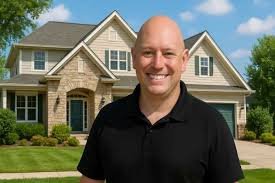
Short Pump and Henrico County are magnets for medical professionals. VCU Health, Bon Secours, and HCA Virginia all draw physicians, residents, and fellows to the Richmond metro area — and with median home prices running $520,000–$527,000 in Henrico County, many doctors start their home search by Googling “physician mortgage loan programs.”
Here is the critical disclosure most retail lenders won’t give you upfront: Duane Buziak at Short Pump Mortgage does not offer physician loans as a standalone product. What he does offer is often better — and this article explains exactly why, with real dollar math to back it up.
Physician mortgage loan programs are niche products typically offered by large retail banks. They waive PMI and allow high debt-to-income ratios for doctors with student loan debt. Sounds great — until you compare the rate to what an independent mortgage broker with access to 500+ wholesale lenders can find you on a conventional or jumbo loan.
This guide covers 7 proven strategies physicians buying in Short Pump, Henrico County, and greater Richmond should actually use to get the best mortgage. Whether you’re a resident with $300,000 in student loans, an attending just starting your first job, or a seasoned physician upgrading to a Green Gate or West Broad Village home, every strategy below includes real math, honest comparisons, and a soft pull pre-approval path that won’t touch your credit score.
1. Use a Soft Pull Pre-Approval to Shop Without Damaging Your Credit
The Challenge It Solves
Physicians — especially residents transitioning to attending roles — are prime candidates for credit score damage from multiple hard inquiries. When you’re comparing lenders, every hard pull can chip away at your score at exactly the wrong moment. For doctors who have spent years building excellent credit despite carrying six-figure student loan balances, that’s a real risk worth avoiding.
The Strategy Explained
The NoTouch Credit Pull is a soft pull pre-approval that lets physicians get a real pre-approval letter and shop Short Pump homes without a single hard inquiry hitting their credit report. This is not a pre-qualification estimate — it’s a legitimate pre-approval based on your actual credit profile, pulled with a soft credit pull mortgage inquiry that has zero impact on your score.
This matters enormously for physicians in transition. If you’re finishing a fellowship at VCU Health and starting an attending position at Bon Secours in 60 days, you don’t want your credit score taking hits while you’re rate shopping. A no hard inquiry mortgage pre approval lets you get your numbers, compare options, and make an offer — all before a single hard pull occurs.
Implementation Steps
1. Contact Short Pump Mortgage and request the NoTouch Credit Pull pre-approval — specifically ask for a mortgage pre approval without hard pull so your credit is protected from the start.
2. Gather your income documentation: most recent pay stubs, W-2s, or your signed offer letter if you’re transitioning to an attending role. Your student loan documentation (IBR payment statement) should also be ready.
3. Receive your pre-approval letter and use it to shop homes near Short Pump Town Center, West Broad Village, or Green Gate without credit score anxiety. This soft pull mortgage broker approach means you can also compare multiple loan scenarios simultaneously.
Pro Tips
A no credit hit mortgage application is especially powerful for physicians who are also applying for practice financing or equipment loans simultaneously. Keeping your credit profile clean during a major career transition protects your options across every financial decision you’re making at once. Ask about the NoTouch Credit Pull by name when you call.
2. Run the Real Math: Conventional Jumbo vs. Physician Loan Rate
The Challenge It Solves
Most physicians accept physician loan program terms without ever running a side-by-side comparison. Retail lenders presenting a physician loan are, by definition, showing you one shelf of products. They have no incentive to tell you that a wholesale conventional or jumbo loan might be cheaper. This strategy closes that information gap with actual numbers.
The Strategy Explained
Consider a physician purchasing a $700,000 home in Short Pump VA. The table below shows an illustrative comparison across loan types. All rates and payments are illustrative examples only — rates change daily and your actual rate depends on credit score, income, and market conditions at time of application. The structural differences, however, are real and consistent.
| Loan Type | Down Payment | Loan Amount | PMI Required | DTI Flexibility | Offer Letter Income | Student Loan Treatment | Rate Source | Available via Short Pump Mortgage |
|---|---|---|---|---|---|---|---|---|
| Physician Loan (Retail) | 5% ($35,000) | $665,000 | No | High | Yes | Often excluded or deferred | Single retail lender — illustrative 7.375% | No — not offered |
| Conventional (Wholesale) | 10% ($70,000) | $630,000 | Possibly — program-dependent | High (with IBR docs) | Yes (Fannie B3-3.1-09) | IBR payment used — not 1% of balance | Wholesale market — illustrative 6.875% | Yes |
| FHA | 3.5% ($24,500) | $675,500 | Yes (MIP for life) | High | Yes | IBR payment accepted | Wholesale — illustrative 6.625% | Yes |
| VA Loan | 0% ($0) | $700,000 | No | High | Yes | IBR payment accepted | Wholesale — illustrative 6.500% | Yes (if eligible) |
| Jumbo (Wholesale) | 10–20% | $560,000–$630,000 | No (typically) | Moderate to High | Investor-dependent | IBR accepted — investor-dependent | Wholesale — illustrative 6.999% | Yes |
All rates and payments above are illustrative examples only for a $700,000 Short Pump VA purchase scenario. Rates change daily. Your actual rate depends on credit score, loan-to-value, income documentation, and market conditions at time of application. Contact Short Pump Mortgage for a real-time rate comparison.
Here is what the math actually shows: on a $665,000 retail physician loan at an illustrative 7.375%, the monthly principal and interest payment is approximately $4,594. On a $630,000 wholesale conventional loan at an illustrative 6.875%, the monthly payment is approximately $4,139. That is a difference of roughly $455 per month, or $27,300 over five years — before accounting for the additional $35,000 in down payment the conventional loan requires. The crossover analysis matters, and it should be run with your actual numbers before you sign anything.
Implementation Steps
1. Get quoted by any physician loan program you’re considering — get the rate, points, and APR in writing.
2. Bring that quote to Short Pump Mortgage and request a wholesale market comparison across conventional, jumbo, and VA options for the same purchase price.
3. Compare total cost of ownership over your anticipated hold period — not just the monthly payment — to identify which structure actually saves you more money.
Pro Tips
The physician loan’s PMI waiver sounds valuable, but it’s priced into the rate. Wholesale conventional products with lender-paid PMI or piggyback structures can eliminate PMI while preserving a lower rate. Ask your broker to model both scenarios side by side before deciding which down payment amount makes sense.
3. Leverage Your DTI Correctly — Student Loans Don’t Have to Kill Your Approval
The Challenge It Solves
Physicians carry some of the highest student loan balances of any profession — often $200,000 to $400,000 or more. When retail lenders calculate debt-to-income ratios using 1% of the outstanding balance as a monthly payment, a $300,000 student loan becomes a $3,000/month liability. That alone can push a physician out of conventional loan eligibility. Physician loan programs market their DTI flexibility as a solution. But conventional loans offer the same solution — most retail lenders just don’t bother to use it.
The Strategy Explained
Fannie Mae’s guidelines (Selling Guide B3-6-05) allow lenders to use the actual Income-Based Repayment (IBR) payment as documented on the credit report or borrower’s student loan statement — rather than calculating 1% of the outstanding balance. If your IBR payment is $0 or $200/month because you’re in residency, that’s the number that goes into your DTI calculation. This is not a physician loan exclusive feature. It is a conventional loan feature that any competent broker can use — and that most retail loan officers never bother to document correctly.
Implementation Steps
1. Pull your current student loan servicer statement showing your IBR payment amount. If you’re on a $0 IBR payment during residency, get that in writing from your servicer.
2. Provide that documentation to your mortgage broker before the pre-approval is run. This ensures the correct payment is used in your DTI calculation from day one.
3. If your IBR payment is $0, ask your broker which investor guidelines apply — some require a minimum payment floor even with $0 IBR documentation. Understanding this upfront prevents surprises at underwriting.
Pro Tips
IBR documentation is time-sensitive. If your income recertification is coming up in 90 days, your IBR payment could change before closing. Get your recertification done before applying so your documented payment is stable throughout the loan process. This one step can be the difference between approval and a last-minute DTI problem.
4. Use a Future Income and Offer Letter Approval Strategy
The Challenge It Solves
Residents and fellows often assume that only physician loan programs will accept an offer letter as income documentation. This assumption costs physicians real money. If you believe only a physician loan program will approve you before your attending salary starts, you’re locked into whatever rate that one retail bank is willing to offer. That’s not a competitive market — it’s a captive audience.
The Strategy Explained
Fannie Mae’s Selling Guide B3-3.1-09 — Employment Offer Letters and Contracts explicitly allows offer letter income on conventional loans when specific documentation requirements are met. The offer letter must be non-contingent, signed, and specify a start date within 90 days of closing. The borrower must also have sufficient liquid assets to cover the gap between closing and the first paycheck.
Most retail loan officers don’t offer this because it requires more documentation work and underwriting judgment. As a wholesale broker with access to 500+ lenders, Duane can find investors who accept offer letter income on conventional and jumbo products — giving physicians the same benefit as a physician loan program without the physician loan rate premium.
Implementation Steps
1. Obtain your signed, non-contingent offer letter from your employer with your start date and salary clearly stated. The start date must be within 90 days of your anticipated closing date.
2. Document your liquid reserves — savings, investment accounts, or gift funds — sufficient to cover the period between closing and your first paycheck from the new position.
3. Work with a wholesale broker who has access to investors that accept offer letter income on conventional products. Not every investor does — which is exactly why having 500+ lender relationships matters.
Pro Tips
If your start date is more than 90 days out, ask about bridge scenarios or whether a physician loan program’s timeline requirements are actually more flexible than Fannie Mae’s. In some cases, a physician loan program genuinely wins on timeline — but that should be an informed decision, not a default assumption. Know your options before you commit.
5. Explore Down Payment Assistance Even on Higher-Priced Homes
The Challenge It Solves
Medical residents and fellows often carry the financial profile of a first-time buyer: limited savings, high student debt, and an income that doesn’t yet reflect their earning potential. Down payment assistance programs are rarely marketed to physicians because most people assume doctors don’t qualify. That assumption is frequently wrong — and it costs residents and fellows tens of thousands of dollars in cash they didn’t need to spend.
The Strategy Explained
With the FHFA 2026 conforming loan limit at $806,500 for Henrico County, many Short Pump home purchases fall within DPA-eligible conventional product parameters. Dynamo DPA and Turbo DPA — programs available through Short Pump Mortgage — can provide down payment and closing cost assistance based on your income at time of application. For a resident earning $60,000–$80,000 annually, income thresholds for DPA programs may be met even if your attending salary will be three times that amount.
Consider the real math: a resident purchasing a $520,000 home near Nuckols Farm Elementary or Deep Run High School who preserves $20,000 in down payment cash via Dynamo DPA can redirect that capital toward student loan principal, practice startup costs, or an emergency fund during the transition to attending income. The long-term financial impact of preserving that liquidity often exceeds the cost of the DPA structure.
Implementation Steps
1. Apply for pre-approval using your current resident or fellow income — not your projected attending salary. DPA eligibility is determined at the time of application.
2. Ask specifically about Dynamo DPA and Turbo DPA program parameters for Henrico County purchases. Eligibility limits, assistance amounts, and repayment terms vary by program and should be reviewed before committing.
3. Run a cash-flow comparison: DPA structure with preserved liquidity versus larger down payment with no assistance. Factor in student loan interest rates to determine where your capital does more work.
Pro Tips
DPA programs sometimes carry slightly higher base rates or require specific investor products. The key question is whether the rate differential over your anticipated hold period costs more or less than the cash you’re preserving. A good broker models this for you — a retail loan officer at a single bank typically can’t, because they don’t have access to the full DPA product menu.
6. If You Have VA Eligibility, Use It — VA Beats Every Physician Loan Program
The Challenge It Solves
Military physicians, JAG officers, and veterans who transitioned into medicine frequently overlook their VA loan eligibility when shopping for a home. The assumption is often that physician loan programs were built for their situation. They weren’t. VA loans were — and the comparison isn’t close.
The Strategy Explained
Per VA.gov, VA loans offer zero down payment, no private mortgage insurance, competitive interest rates, and a VA cash-out refinance at 100% LTV. No physician loan program matches this combination. On a $650,000 Short Pump home purchase, consider the illustrative comparison:
A physician loan at 5% down means $32,500 out of pocket, a $617,500 loan, and a retail rate (illustrative 7.375%) producing a monthly P&I payment of approximately $4,261. A VA loan means $0 down, a $650,000 loan, a VA funding fee of approximately $13,975 (2.15% first use, financed into the loan), a total loan amount of $663,975, and a wholesale VA rate (illustrative 6.500%) producing a monthly P&I payment of approximately $4,198. The VA borrower preserves $32,500 in cash, pays a comparable monthly payment, and carries no PMI — ever.
Over five years, the VA borrower has $32,500 more in liquid capital working elsewhere — whether paying down student loans, funding a practice, or sitting in a high-yield account. That is a structural advantage no physician loan program can replicate for an eligible veteran.
Implementation Steps
1. Verify your VA eligibility by obtaining your Certificate of Eligibility (COE) through VA.gov or by working with a VA-approved broker who can pull it on your behalf.
2. Confirm whether this is your first VA loan use or a subsequent use — the VA funding fee differs, and if you have a service-connected disability rating, the funding fee may be waived entirely.
3. Request a side-by-side comparison of VA versus any physician loan program you’ve been quoted, using your actual loan amount and current wholesale VA rates. The numbers will tell the story.
Pro Tips
VA loans at Short Pump Mortgage are available down to 500 FICO. If you’re a military physician who carried student debt through residency and your credit score took a hit, VA eligibility may be your most powerful mortgage tool — and it’s available at credit thresholds that most physician loan programs won’t touch.
7. Why a Wholesale Broker Beats Retail Physician Loan Programs — and What to Ask Any Lender
The Challenge It Solves
Physicians are intelligent, analytical, and accustomed to doing their research. But the mortgage market is deliberately opaque. Retail lenders offering physician loan programs benefit from physicians believing those programs are the only solution. Understanding the structural difference between a retail lender and a wholesale broker is the single most important piece of financial literacy a physician can have before signing a purchase contract.
The Strategy Explained
When you apply for a physician loan at Rocket Mortgage, Movement Mortgage, or a retail bank, you are getting one institution’s rate on one shelf of products. That institution’s profit margin is built into the rate you’re quoted. They are not shopping the market on your behalf — they are selling you their product.
When you work with an independent wholesale broker like Duane Buziak at Short Pump Mortgage, your loan is submitted to the wholesale market — a network of 500+ lenders competing for your business. Wholesale pricing is structurally different from retail pricing because the broker is compensated by the lender, not by marking up your rate. The result is that wholesale rates are often lower than retail rates for the same borrower profile. This is not a marketing claim — it is how the mortgage market is structured.
Sparrow Home Loans (Atlantic Bay retail), C&F Mortgage (retail), and RatePro (a fellow UWM broker) do not prominently advertise physician loan programs. This article exists because that search traffic is largely uncaptured — and the physicians finding this page deserve to know that a wholesale broker can often beat the physician loan program rate they’ve been quoted.
The NoTouch Credit Pull means you can get a real comparison from Short Pump Mortgage without a hard inquiry — and then decide with full information. That’s the second time NoTouch Credit Pull appears in this article, and it’s intentional: this is the most important tool a physician can use when rate shopping.
Four questions every physician should ask before choosing a physician loan program:
Question 1: “Is this your best rate, or is this the rate your institution offers for this product?” A retail lender can only offer their own products. A wholesale broker can shop 500+ lenders.
Question 2: “Are you using my actual IBR payment for DTI calculation, or 1% of my outstanding balance?” If they say 1%, they’re not using Fannie Mae’s IBR guidelines correctly — and that mistake could cost you approval or push you into a higher rate tier.
Question 3: “What is the APR, not just the rate?” Points, origination fees, and lender fees are embedded in the APR. A physician loan with no PMI but a higher rate and fees may cost more over five years than a conventional loan with temporary PMI.
Question 4: “Can you show me a side-by-side comparison of this physician loan versus a conventional or VA alternative?” If a lender can’t or won’t run that comparison, they’re not working in your interest.
Implementation Steps
1. Get any physician loan program quote in writing — rate, APR, points, monthly payment, and PMI status.
2. Bring that quote to Short Pump Mortgage for a wholesale market comparison. The NoTouch Credit Pull means this comparison costs you nothing in terms of credit score impact.
3. Compare total cost of ownership over your expected hold period — 3 years, 5 years, or 7 years — not just the monthly payment. The right loan depends on how long you plan to stay in the home.
Pro Tips
Physicians who plan to refinance in 3–5 years as their income grows should weight rate over structure. Physicians who plan to hold long-term should weight total interest cost and PMI elimination timeline. Neither analysis favors accepting a retail physician loan program rate without a wholesale comparison first.
Written by Duane Buziak, NMLS #1110647 | Independent Mortgage Broker | Short Pump, VA
Putting It All Together: Your Short Pump Physician Mortgage Roadmap
If you’re a physician, resident, fellow, or military doctor buying near Short Pump Town Center, West Broad Village, or Green Gate, here is your implementation sequence:
Start with a NoTouch Credit Pull soft pull pre-approval. No hard inquiry, no credit score impact, no commitment — just real buying power in minutes. Then compare the actual rate on a conventional, jumbo, or VA loan against any physician loan program you’ve been quoted. In most cases, the wholesale market wins on rate, and the conventional or VA product provides the same DTI flexibility and offer letter income acceptance that physician loan programs advertise as exclusive features.
Duane Buziak has closed hundreds of loans for medical professionals in the Richmond area and has never lost a rate war on FHA or VA. The 500+ wholesale lender network is the structural advantage that retail physician loan programs simply cannot match.
If you’re a resident, fellow, or attending physician ready to buy in Henrico County, call (804) 212-8663 or connect with our local mortgage experts today to start your soft pull pre-approval. You’ll know your real buying power — and your real rate options — without a single hard inquiry hitting your credit report.