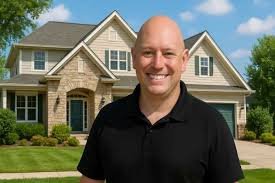
Picture this: two neighbors in the same Short Pump subdivision, both buying homes near West Broad Village, both with similar credit profiles. One walks into a retail bank and gets pre-approved at 7.25%. The other calls an independent wholesale mortgage broker and gets a quote at 6.625%. On a $520,000 home, that difference is not a rounding error — it is more than $200 a month and over $12,000 across five years.
That scenario plays out constantly in Henrico County. And the buyers who understand why it happens are the ones who end up on the right side of it.
Virginia home loan rates are not a single number posted on a bank’s website. They are a moving target shaped by macroeconomic forces, your specific credit profile, the loan type you choose, and — critically — the lender channel you use. A retail bank quote and a wholesale broker quote for the exact same borrower on the exact same property can differ by a quarter point or more, and that gap has real dollar consequences in a $520K–$527K median market like Short Pump.
By the end of this article, you will understand exactly what drives your rate, how to compare quotes accurately, and why the lender you choose matters as much as the rate itself. We will walk through real dollar math, a side-by-side loan type comparison, and a practical playbook for locking the best rate before you make an offer.
Written by Duane Buziak, NMLS #1110647 | Coast2Coast Mortgage LLC NMLS #376205 | Short Pump Mortgage
What Actually Moves Virginia Home Loan Rates
Start with what you cannot control. Virginia home loan rates — like all U.S. mortgage rates — are fundamentally tied to three macro forces: the 10-year Treasury yield, Federal Reserve monetary policy, and mortgage-backed securities (MBS) pricing in the secondary market. When Treasury yields rise, mortgage rates tend to follow. When the Fed signals tighter policy, MBS spreads widen and rates move up. These are global capital market forces that no borrower, broker, or bank controls.
What this means practically: the rate environment you walk into when you start your home search is largely set by forces outside your control. What IS within your control is how you position yourself within that environment.
The FHFA 2026 conforming loan limit for Virginia is $806,500 (baseline) and $1,249,125 (high-cost ceiling). This matters for rate shopping because conforming conventional loans — those at or below $806,500 — are eligible for the most competitive conventional pricing. Loans above that threshold enter jumbo territory, where lenders apply different risk pricing and rates can diverge significantly from conforming benchmarks.
The good news for most Short Pump and Henrico County buyers: with a median home price of $520,000–$527,000 in Henrico County, the vast majority of purchases fall well within the conforming limit. That means access to the deepest pool of lender competition and the most favorable conventional pricing.
Here is what you CAN control — and what this article will help you optimize:
Loan type selection: FHA, VA, USDA, conventional, and jumbo each carry different rate structures, insurance costs, and qualification thresholds. Choosing the right program for your profile is often worth more than any rate negotiation.
FICO score tier: Conventional loan pricing is tiered in 20-point FICO bands. Moving from a 699 to a 720 can shift your rate meaningfully. Moving from 740 to 760 adds another tier of improvement.
Loan-to-value ratio: The more equity you bring to the table — either through down payment or home value — the lower the lender’s risk, and typically the lower your rate.
Lender channel: This is the one most buyers overlook. A wholesale mortgage broker accesses lender pricing before the retail markup is added. A retail bank or direct lender prices at retail, with their margin embedded in the rate. The structural difference in pricing can be 0.25% to 0.50% on the same loan — and on a $494,000 loan amount, that is real money.
On a $494,000 loan (5% down on a $520,000 Short Pump home), a 0.25% rate difference equals approximately $80–$90 per month. A 0.625% spread — the difference between the high retail scenario and a competitive wholesale quote — equals over $200 per month. The math section below makes this concrete.
The Real Dollar Difference: Rate Math on a $520,000 Short Pump Home
Let’s put actual numbers to the conversation. All rate scenarios below are illustrative rate tiers for comparison purposes — actual rates change daily and depend on individual qualification. These figures are not presented as current market rates; they are used to demonstrate the dollar impact of rate differences on a typical Short Pump purchase.
Base scenario: $520,000 purchase price | 5% down payment ($26,000) | Loan amount: $494,000 | 30-year fixed
Scenario A — Higher retail rate (illustrative: 7.25%): Monthly principal and interest = approximately $3,370. This is the rate tier a buyer might receive from a single retail bank without shopping the market.
Scenario B — Mid-market rate (illustrative: 6.875%): Monthly principal and interest = approximately $3,246. This represents a rate a buyer might find after some comparison shopping among retail lenders.
Scenario C — Competitive wholesale broker rate (illustrative: 6.625%): Monthly principal and interest = approximately $3,163. This represents what a wholesale broker with access to 500+ lenders can often deliver by competing lenders against each other at the wholesale pricing level.
Monthly difference between Scenario A and Scenario C: approximately $207 per month. Five-year cumulative difference: approximately $12,420. That is not a trivial number — it is a car payment, a year of property taxes, or a meaningful chunk of home equity.
Now layer in loan type. The note rate alone does not tell the full story. Consider the same $520,000 home under three different loan structures:
VA loan (zero down, no PMI): Loan amount $520,000 plus the VA funding fee. For a first-time VA use with zero down, the VA funding fee is 2.15% of the loan amount, or approximately $11,180 — typically financed into the loan, bringing the total VA loan to roughly $531,180. At an illustrative VA rate of 6.50% (VA loans typically price lower due to the government guarantee reducing lender risk), the monthly P&I is approximately $3,358. Critically, there is no private mortgage insurance (PMI). Compared to conventional with PMI, the VA borrower saves an estimated $150–$200 per month in insurance costs — making the effective monthly cost competitive even at a similar note rate.
FHA loan (3.5% down, MIP required): Down payment $18,200, loan amount $501,800 plus upfront MIP of 1.75% ($8,782 financed), total loan approximately $510,582. FHA carries an annual mortgage insurance premium (MIP) for the life of the loan in most cases — adding roughly $170–$200/month to the effective cost. FHA rates are competitive, but the MIP load is a real factor in the total payment picture.
Conventional (5% down, PMI until 80% LTV): Loan amount $494,000 with PMI typically running $100–$180/month depending on credit score. PMI drops off once you reach 80% LTV — unlike FHA MIP, which stays for the life of the loan in most cases.
The takeaway: “rate” is not the full picture. The effective monthly cost includes insurance, funding fees, and the structure of the loan itself. This is why working with a broker who can run all scenarios side by side matters.
Here is something else worth knowing before you start shopping: Duane Buziak’s NoTouch Credit Pull process lets you get a real, personalized rate quote using a soft credit inquiry — no hard pull, no credit score impact. You can see your actual rate across multiple loan programs before you commit to any application. This is the first step most serious buyers in Short Pump and Henrico County take before they start touring homes.
Virginia Loan Types Side by Side: FHA, VA, USDA, Conventional & Jumbo
Understanding how each loan program is structured helps you choose the one that gives you the lowest effective monthly cost — not just the lowest note rate. Here is a direct comparison using 2026 figures only.
| Loan Type | Min Down Payment | Min FICO | PMI / MIP Required | 2026 Loan Limit (VA) | Best For |
|---|---|---|---|---|---|
| FHA | 3.5% (580+ FICO) / 10% (500–579) | 500 | Yes — Upfront 1.75% + Annual MIP (life of loan in most cases) | $806,500 | Buyers with lower credit scores or limited savings |
| VA | 0% (zero down) | 500 (through Short Pump Mortgage) | No PMI — one-time funding fee (2.15% first use, 0% down) | No loan limit for eligible veterans | Active duty, veterans, surviving spouses — best effective rate |
| USDA | 0% (zero down) | 640 (typical) | Annual guarantee fee (0.35% of loan balance) — much lower than FHA MIP | $806,500 (conforming guideline) | Eligible suburban/rural areas; income-qualified buyers |
| Conventional (Conforming) | 3%–5% | 620 (best pricing at 740+) | Yes, if LTV above 80% — drops at 80% LTV | $806,500 | Buyers with 680+ credit, 5%+ down, seeking PMI removal path |
| Jumbo | 10%–20% (varies by lender) | 700+ (typical) | Varies by lender | Above $806,500 | Luxury purchases above conforming limit in Short Pump / Henrico |
Why do VA rates typically price lower than conventional? The U.S. government guarantees a portion of every VA loan, which dramatically reduces the lender’s default risk. Lower risk means lenders can offer lower rates — and because there is no PMI, the effective monthly cost advantage of a VA loan is often the largest of any program available.
FHA is the go-to for buyers with credit challenges or limited savings. The 3.5% down requirement is accessible, and FHA underwriting is more forgiving of past credit events than conventional guidelines. The trade-off is the mortgage insurance premium, which adds to the monthly cost and — in most cases — stays for the life of the loan rather than dropping off at 80% LTV like conventional PMI does.
USDA is genuinely underused by Henrico County buyers. Certain suburban and semi-rural areas within or adjacent to Henrico County qualify for USDA Rural Development financing — zero down payment, competitive rates, and a much lower annual fee structure than FHA. Eligibility is property-specific, so the USDA eligibility map is the first stop for buyers who think they might qualify.
For most Short Pump buyers purchasing at or below $806,500, the conforming conventional market offers deep lender competition and favorable pricing — especially for borrowers with 720+ FICO and 10%+ down. Above $806,500, you enter jumbo territory and the pricing dynamics shift significantly.
Why Your Lender Channel Shapes Your Rate More Than You Think
Here is the structural reality that most buyers never learn until after they have already closed: the lender you choose determines the pricing tier you access, not just the rate you negotiate.
Retail lenders — banks, credit unions, and direct mortgage companies — price loans at the retail level. Their cost of funds, branch overhead, marketing expenses, and profit margin are all embedded in the rate they quote you. You are not just paying for the money; you are paying for the entire retail infrastructure behind it.
A wholesale mortgage broker operates differently. Duane Buziak and the Short Pump Mortgage team access pricing from 500+ wholesale lenders — and that pricing is set at the wholesale level, before any retail markup is applied. The broker’s compensation is transparent and regulated; it does not inflate the rate the way a retail margin does. The result is structurally lower pricing on the same loan, for the same borrower, on the same property.
Think of it like buying produce at a farmers market versus a grocery store. The grocery store adds its margin, its refrigeration costs, its real estate overhead. The farmers market brings you closer to the source. The product is the same; the pricing structure is not.
This structural advantage is amplified by competition. When Duane submits a loan to 500+ wholesale lenders, those lenders compete for the business. No single retail bank has that incentive — they quote their rate, take it or leave it. The wholesale market creates genuine competition that benefits the borrower.
Here is something critical for rate shoppers to understand: when you apply for pre-approval at multiple retail lenders to compare rates, each application typically triggers a hard credit inquiry. Multiple hard pulls in a short window can affect your credit score, which can then affect the rate you qualify for — a frustrating catch-22. Duane’s NoTouch Credit Pull process solves this entirely.
Using a soft credit pull mortgage approach, Duane can pull a comprehensive view of your credit profile without triggering a hard inquiry. This means you can get a real, accurate rate quote — not a generic advertised rate — with a no hard inquiry mortgage pre-approval. You can explore your options, compare loan programs, and understand exactly what you qualify for as a mortgage pre-approval without hard pull. As a soft pull mortgage broker, Duane’s process protects your credit while giving you the information you need to make a confident decision. It is a true no credit hit mortgage application — your score is not touched until you are ready to move forward.
The credential proof matters here too. Duane Buziak ranked as a Scotsman Guide Top Originator in 2026 with $51.2M in volume. He earned Virginia Broker of the Year in both 2024 and 2025. He holds UWM PRO ELITE 2025 status and has accumulated 1,400+ five-star reviews from Virginia buyers. These are not marketing claims — they are verifiable, public production records that reflect consistent delivery of competitive rates and smooth closings in this exact market.
When you work with a broker of this caliber and production volume, you are not just accessing wholesale pricing — you are accessing the relationships, lender priority, and operational infrastructure that comes with being a top-tier originator.
Down Payment Assistance and Rate Buydowns: Closing the Affordability Gap in Henrico County
Even with competitive wholesale pricing, the upfront cost of buying a $520,000 home in Short Pump can feel like a barrier. Two tools can meaningfully close that gap: down payment assistance programs and rate buydowns.
Short Pump Mortgage offers two proprietary DPA programs: Dynamo DPA and Turbo DPA. These programs can reduce or eliminate the out-of-pocket down payment and closing cost burden for qualifying buyers. It is important to understand how DPA interacts with your rate: some DPA programs are structured as second liens or grants that carry a slightly higher note rate in exchange for the assistance funds. Others are structured to be rate-neutral. The right structure depends on your specific scenario — how long you plan to stay in the home, your cash reserves, and your income profile.
The framing that matters: these are no-out-of-pocket closing options, not “zero closing costs.” Closing costs exist on every transaction. The question is who pays them and how they are structured. DPA programs, seller concessions, and lender credits are all tools for restructuring who bears those costs — and a skilled broker knows how to layer them strategically.
Rate buydowns are a separate but related tool. A permanent buydown means you pay discount points at closing to permanently lower your rate for the life of the loan. A temporary buydown — the most common structure being a 2-1 buydown — reduces your rate by 2% in year one and 1% in year two before settling at the full note rate in year three. In a market where sellers are sometimes offering concessions, a 2-1 buydown funded by seller concessions can dramatically lower your payment in the first two years of ownership.
In the current Short Pump and Green Gate market, where median prices sit near $520,000 and some sellers are motivated to close, negotiating a seller concession toward a rate buydown is a real strategy — not a theoretical one. A skilled broker structures the offer to maximize the buydown benefit within the allowable concession limits for your loan type.
The conforming loan limit context matters here too. With FHFA 2026 limits at $806,500 for Virginia, most Short Pump buyers near Short Pump Town Center, West Broad Village, and Green Gate are purchasing well within conforming territory. That means access to the deepest pool of conventional lender competition and the most favorable DPA program eligibility. Buyers above $806,500 enter jumbo territory, where DPA availability narrows and pricing dynamics shift — another reason to understand your loan amount before you start shopping.
8 Questions Short Pump and Henrico Buyers Ask About Virginia Home Loan Rates
1. What is the current Virginia home loan rate for a $520,000 home in Short Pump?
Rates change daily and depend on your loan type, credit score, and down payment — a soft pull pre-approval with a Short Pump mortgage broker gives you a real, personalized rate quote without affecting your credit. There is no single posted rate that applies to every buyer; your actual rate is determined by your specific profile run through a live lender pricing engine.
2. Does my credit score affect my mortgage rate in Virginia?
Yes — your FICO score is one of the most direct factors in your Virginia mortgage rate. Buyers with scores above 740 typically access the best conventional pricing tiers, while FHA loans are available down to 580 with 3.5% down, and VA loans are available down to 500 FICO through Short Pump Mortgage. Each 20-point improvement in your FICO score can move you into a better pricing tier on a conventional loan.
3. What FICO score do I need for the best rate on an FHA loan in Henrico County?
FHA loans are available with a 580 FICO score and 3.5% down in Henrico County; scores of 620 and above typically improve pricing, and scores of 680+ access the best FHA rate tiers. Short Pump Mortgage has never lost an FHA rate competition — if you are comparing FHA quotes, call before you commit.
4. Can I get a VA loan rate with a 500 credit score in Virginia?
Yes — Short Pump Mortgage offers VA loans down to a 500 FICO score in Virginia, one of the lowest credit thresholds available for any mortgage program. The VA loan program is designed to serve veterans and active-duty service members, and the government guarantee allows for more flexible credit underwriting than conventional programs.
5. How does a mortgage broker get lower rates than a bank in Short Pump?
A mortgage broker accesses wholesale lender pricing from 500+ lenders before retail markup is added — structurally lower than what a single retail bank can offer on the same loan. The broker’s compensation is transparent and regulated; no hidden retail margin is embedded in the rate the way it is at a bank or direct lender.
6. Are USDA loans available in Short Pump or Henrico County, and what are the rates?
Some areas of Henrico County qualify for USDA Rural Development loans, which offer zero down payment and competitive rates with a lower annual fee structure than FHA. Eligibility is property-specific — not all addresses in Henrico qualify — and can be checked through the USDA eligibility map. If your target home is in an eligible area, USDA is one of the most cost-effective programs available.
7. What is a soft pull mortgage pre-approval and does it affect my credit score?
A soft pull mortgage pre-approval (also called a NoTouch Credit Pull) uses a soft credit inquiry that does not affect your credit score — unlike a hard pull, it leaves no mark on your report and lets you shop rates without risk. Duane Buziak’s NoTouch Credit Pull process gives you a real, accurate rate quote across multiple loan programs before you commit to any formal application.
8. How much does a 0.25% rate difference cost me on a $520,000 home in Virginia?
On a $494,000 loan (5% down on a $520,000 home), a 0.25% rate difference equals approximately $80–$90 per month and over $5,000 across five years — making rate shopping with a wholesale broker a meaningful financial decision. A 0.625% spread, which is the difference between a high retail quote and a competitive wholesale broker rate on this loan amount, translates to over $200 per month and more than $12,000 over five years.
How to Lock the Best Virginia Home Loan Rate Before You Make an Offer
Knowing what drives your rate is only useful if you translate it into action. Here is the practical playbook for Henrico County and Short Pump buyers who want to enter the market with the strongest possible rate position.
Step 1: Know your credit tier before you shop. Use a soft pull to see where you stand without triggering a hard inquiry. Your FICO score tier determines which loan programs you qualify for and which pricing bands you access on conventional loans. Knowing this before you shop prevents surprises and lets you target the right program from day one.
Step 2: Choose your loan type strategically. If you are a veteran or active-duty service member, VA is almost always the most cost-effective program — zero down, no PMI, and typically the lowest effective monthly payment. If your credit is below 680, FHA offers the most accessible path. If your property is in a USDA-eligible area of Henrico County, zero-down USDA may be your best option. If you have 680+ credit and 5%+ down, conventional with a clear PMI removal path is often the right move.
Step 3: Compare APR, not just rate. The annual percentage rate (APR) includes lender fees, discount points, and other costs rolled into a single comparable figure. Two lenders quoting the same rate can have meaningfully different APRs depending on their fee structure. APR is the honest comparison metric.
Step 4: Lock at the right time. Rate lock windows in Virginia typically run 30, 45, or 60 days. A standard Henrico County contract-to-close timeline runs 30–45 days for a well-prepared buyer. Lock too early on a long timeline and you may pay a premium for the extended lock. Lock too late and you risk rate movement before closing. A broker who closes regularly in this market knows the timing dynamics and will guide you on the optimal lock window for your specific contract.
The fastest way to execute this playbook is a no-obligation soft pull pre-approval that shows you your real rate — not a generic advertised rate — across every program you qualify for. That is exactly what Duane Buziak offers through the NoTouch Credit Pull process.
Duane Buziak, NMLS #1110647 | Coast2Coast Mortgage LLC, NMLS #376205 | Equal Housing Opportunity | Licensed in VA, FL, TN, GA, DC. Rates shown are illustrative and subject to change without notice. Not a commitment to lend. All loan approvals subject to underwriting guidelines.
Your Next Move on Virginia Home Loan Rates
Three things to take away from everything above.
First: Virginia home loan rates are driven by macro forces you cannot control AND by choices you absolutely can control — loan type, credit profile, and lender channel. Optimizing the factors within your control is where the real savings live.
Second: the broker channel consistently offers structural pricing advantages over retail lenders on the same loan. Access to 500+ wholesale lenders, transparent compensation, and genuine lender competition produce rates that a single retail bank simply cannot match structurally.
Third: the fastest, safest first step is a soft pull pre-approval. No hard inquiry. No credit impact. Real numbers across every program you qualify for — before you tour a single home or write a single offer.
Ready to see your actual rate on a Short Pump or Henrico County home? Call Duane Buziak at (804) 212-8663 or connect with our local mortgage experts today at ShortPumpMortgage.com. No hard credit pull required.
One Response