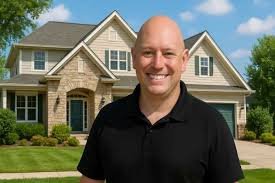
By the end of this guide you’ll know the exact sequence Short Pump and Henrico County buyers follow to get approved for a mortgage in 2026, from checking credit to closing day. Before starting, have a rough idea of your income, monthly debts, and how much cash you have for a down payment. Knowing how to get approved for a mortgage isn’t about one magic step, it’s about clearing each stage in the right order so nothing derails you later.
Step 1: Check Your Credit and Get a Soft-Pull Pre-Approval
Start by pulling your own credit report through AnnualCreditReport.com before any lender touches your file. Look for errors, old collections, or accounts you forgot about. It costs you nothing and gives you time to dispute mistakes before they show up in an underwriting review.
Once you know where you stand, ask for a soft credit pull mortgage pre-approval rather than a full hard-inquiry application. A no hard inquiry mortgage pre-approval lets you see your likely rate and loan amount without touching your score, which matters if you’re still comparing programs or shopping multiple homes. Duane Buziak’s NoTouch Credit Pull is one example of this kind of soft pull mortgage broker service: it produces a real pre-approval letter for Short Pump buyers without the hard inquiry that a traditional bank application requires.
The most common mistake at this stage is applying with several retail lenders back-to-back, hoping to compare rates, and racking up multiple hard inquiries before you’ve even settled on a loan program. That habit can shave points off your score right when you need it highest. A mortgage pre-approval without hard pull avoids that problem entirely and still gives you a document you can hand a listing agent in Short Pump Town Center or West Broad Village. If you later decide to move forward, the lender converts the soft pull into a full application with your consent, so you haven’t lost any time, only avoided unnecessary score damage.
Step 2: Calculate What You Can Actually Afford
Affordability math starts with your loan amount, not your list price. Suppose you’re eyeing a $520,000 home in Short Pump with 5% down, or $26,000. That leaves a base loan amount of $494,000. On an FHA loan at roughly 6.75% (illustrative, as of September 2026, and subject to daily market movement), principal and interest runs approximately $3,204 a month. Add FHA mortgage insurance of about $360 a month, plus estimated property taxes and homeowners insurance in Henrico County of roughly $520 combined, and you land near $4,084 a month in total housing cost. If a portion of that $26,000 down payment is covered by a program like Dynamo DPA, your out-of-pocket cash to close shrinks, though the loan amount and monthly payment stay essentially the same since DPA typically layers on top of the base loan rather than reducing it.
From there, lenders look at your debt-to-income ratio, which is your total monthly debts (including the new housing payment) divided by your gross monthly income. Conventional loans generally cap DTI around 45-50% with strong compensating factors like reserves or a higher credit score. FHA is often more flexible, with approvals reaching 43-50% DTI when the borrower has offsetting strengths such as a low loan-to-value ratio or significant residual income. VA loans use residual income guidelines rather than a hard DTI ceiling in many cases.
A misconception worth correcting here: pre-qualification and pre-approval are not the same thing. Pre-qualification is a quick estimate based on numbers you self-report. Pre-approval, even a soft-pull version, requires verified income and asset documentation reviewed against actual underwriting guidelines. Sellers in a competitive Short Pump market, especially near Green Gate or Nuckols Farm Elementary, will weigh a verified pre-approval far more heavily than a pre-qualification letter.
Step 3: Gather Your Income, Asset, and Identity Documents
Once you know your target price range, assemble your document file before you need it, not after an underwriter asks for it. For most W-2 employees, the core set includes:
- Two years of W-2s and, if applicable, two years of federal tax returns
- Your most recent 30 days of pay stubs
- Two months of bank statements for every account you’ll use for closing or reserves
- A valid government-issued photo ID
- Any documentation explaining gaps in employment or large deposits
If you’re self-employed or your income comes from gig work, freelance contracts, or rental property, standard tax-return underwriting can undersell your real earning power. Bank statement loan programs use 12 to 24 months of deposits instead of tax returns to establish income. DSCR loans qualify investment purchases based on the property’s rental income rather than your personal W-2s. ITIN programs open ownership to borrowers without a Social Security number. These are worth discussing early if your tax returns show heavy deductions that shrink your qualifying income on paper.
One mistake trips up more buyers than any other: depositing large sums of cash into a bank account right before applying. Underwriters flag unexplained deposits and will ask for a paper trail. If a relative is gifting part of your down payment, get the gift letter and the paper trail documented in advance rather than scrambling for it mid-underwriting.
Step 4: Compare Loan Programs and Down Payment Options
Henrico County buyers generally choose among four main paths: FHA, VA, USDA, and Conventional. Each has different thresholds for down payment, credit, and mortgage insurance.
| Program | Minimum Down Payment | Credit Minimum | Mortgage Insurance | 2026 Loan Limit (Henrico) |
|---|---|---|---|---|
| FHA | 3.5% | 580 (500 with 10% down) | Upfront + monthly MIP | $806,500 baseline |
| VA | 0% (100% LTV, including cash-out) | Down to 500 with select brokers | None, funding fee applies | No cap with full entitlement |
| USDA | 0% | 640 typical | Guarantee fee + annual fee | Set by area income/property limits |
| Conventional | 3-5% | 620+ | PMI, removable at 78% LTV | $806,500 / $1,249,125 high-cost |
For buyers short on down payment cash, Dynamo DPA and Turbo DPA are two down payment assistance layers that can stack on top of an FHA or conventional loan for Henrico County purchases, reducing the cash needed at closing. These programs don’t replace qualifying requirements, they supplement the funds you bring to the table.
The FHFA’s 2026 conforming loan limit sets the baseline for conventional financing at $806,500, with a high-cost ceiling of $1,249,125 in designated areas. Anything above that baseline in a standard-cost county typically requires jumbo financing, which comes with its own reserve and credit requirements. Knowing where your target price sits relative to that line shapes which program makes sense before you ever lock a rate.
Step 5: Choose a Broker Instead of a Single-Shelf Lender
Written by Duane Buziak, NMLS #1110647 | Coast2Coast Mortgage LLC NMLS #376205
I walk Short Pump buyers through this exact sequence every week, and the choice of who originates your loan matters as much as the program itself. A retail lender or bank offers only its own rate sheet and its own overlays. An independent broker submits one application to a network of wholesale lenders and lets them compete for your loan. As a broker with access to 500+ wholesale lenders, I can shop FHA, VA, USDA, conventional, and non-QM options simultaneously rather than being locked into a single institution’s pricing on any given day.
In the Short Pump and greater Henrico market, that structural difference shows up in real terms. Retail options like Sparrow Home Loans or Rocket Mortgage price loans off their own shelf. Movement Mortgage and C&F Mortgage operate similarly, each with a single set of guidelines and rates. A broker isn’t tied to one shelf, which is how I’ve been able to hold an FHA rate-war track record locally and extend VA financing down to a 500 FICO score, flexibility that most single-shelf lenders simply can’t match because their overlays don’t allow it.
This isn’t a knock on any of those companies, it’s a structural fact about how retail lending works versus wholesale brokering. When you’re deciding how to get approved for a mortgage on a tighter timeline or with a less-than-perfect credit file, having more than one shelf to pull from often makes the difference between a decline and an approval.
Step 6: Submit Your Application and Clear Underwriting Conditions
Once you’ve picked a program and a broker or lender, the full application triggers automated underwriting, commonly called AUS. The system reviews your credit, income, and assets against the program’s algorithm and returns findings, either an approve/eligible result or a refer, which sends the file to manual underwriting.
From there you typically receive a conditional approval, meaning the underwriter has reviewed your file and is asking for specific documentation before issuing a final clear-to-close. Common conditions that stall this stage include:
- Debts that show up on your credit report but weren’t disclosed on your application
- A job change or new hire letter that resets your income verification
- Letters of explanation required for recent credit inquiries or unusual account activity
- Updated bank statements if more than a set number of days pass during underwriting
The CFPB’s guide to the mortgage process outlines what you’re entitled to during this stage, including timely disclosures and a clear breakdown of your loan terms before closing. Respond to conditions quickly and avoid any financial moves, new credit cards, car loans, or job changes, until you’re cleared to close. Even a small new debt can shift your DTI enough to require re-underwriting.
Step 7: Lock Your Rate and Prepare for Closing Day
Rate locks typically run 30 to 60 days and need to be timed against your appraisal and clear-to-close schedule. In a competitive Short Pump market, where the median home price sits around $520,000 to $527,000 in Henrico County, locking too early can mean paying extension fees if the appraisal or underwriting timeline slips, while locking too late exposes you to rate movement in the days before closing. Coordinate your lock with your loan officer once you have a ratified contract and an appraisal ordered.
Veterans and active-duty buyers have an added option worth knowing about: VA cash-out refinances allow up to 100% loan-to-value, per VA.gov’s loan types page, which is significantly more flexible than conventional cash-out limits and worth factoring into long-term plans even if you’re closing on a purchase now.
Short Pump and Henrico Mortgage FAQ
What is the minimum credit score to buy a home in Short Pump VA? FHA financing can go as low as 500 with a 10% down payment, and VA loans through select brokers can also qualify at 500, though conventional loans typically require 620 or higher.
How much do I need to put down on a $520,000 home in Henrico County? With FHA at 3.5% down you’d need about $18,200, while VA-eligible buyers can purchase with $0 down, and conventional 5%-down loans require roughly $26,000.
Can I get a mortgage in Short Pump with a soft credit pull? Yes, a soft credit pull mortgage pre-approval like NoTouch Credit Pull lets you see your terms without a hard inquiry hitting your score.
What down payment assistance programs are available in Short Pump VA? Dynamo DPA and Turbo DPA can layer on top of FHA or conventional loans to reduce the cash you need at closing for eligible Henrico County buyers.
How long does mortgage approval take in Henrico County? Most full approvals, from application to clear-to-close, take 21 to 35 days depending on appraisal turnaround and how quickly conditions are cleared.
Can self-employed buyers get approved for a mortgage in Short Pump? Yes, bank statement loan programs qualify self-employed borrowers using 12 to 24 months of deposits instead of tax returns when write-offs suppress qualifying income.
What credit score do veterans need for a VA loan in Short Pump? VA guidelines don’t set a hard minimum, but some brokers approve VA borrowers down to a 500 FICO score, well below most retail lenders’ overlays.
Does a mortgage pre-approval hurt my credit score? A soft pull mortgage broker pre-approval does not affect your score, since a no credit hit mortgage application checks your file without a hard inquiry.
Your next move is straightforward: pull your own credit, run the affordability math against a real Short Pump price point, and request a soft-pull pre-approval before you start touring homes. That order keeps you in control of the process instead of reacting to it.
This content is for informational purposes only and does not constitute a loan commitment. Loan approval subject to credit, income, and property qualification. Duane Buziak NMLS #1110647 | Coast2Coast Mortgage LLC NMLS #376205 | Equal Housing Lender | Licensed in VA, FL, TN, GA, DC.
Ready to find the right mortgage solution for your Short Pump area home? Connect with our local mortgage experts today for personalized guidance and access to multiple lenders who compete for your best rate.