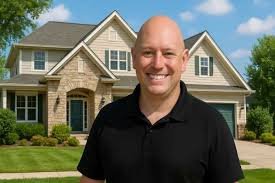
A $525,000 home near Short Pump Town Center requires $18,375 down with an FHA loan at 3.5%. For many Richmond-area buyers, that cash requirement – not the monthly payment – is the barrier. This Virginia down payment assistance guide explains where assistance can fit, what it can and cannot cover, and how to start without putting a hard inquiry on your credit report.
The first move is not filling out random online forms. It is getting a credit-safe pre-approval through a NoTouch Credit Pull. This soft pull pre-approval uses a soft credit pull, so there is no hard inquiry and no credit hit while we identify the programs that actually match your income, property, credit profile, and available cash.
What down payment assistance means in Virginia
Down payment assistance, commonly called DPA, is money structured to help cover a buyer’s down payment and, in some cases, eligible closing costs. It is not one universal program with one income limit or one repayment rule. Assistance may arrive as a grant, a deferred second mortgage, or a second mortgage with payments. The details matter as much as the dollar amount.
In Henrico County and greater Richmond, buyers commonly encounter statewide housing-agency programs, local or employer-related assistance, and mortgage programs that pair assistance with FHA, VA, USDA, or conventional financing. Programs can change funding levels, household-income caps, purchase-price limits, credit standards, and property requirements. A program that works for a buyer in Glen Allen may not fit a $600,000 purchase in West Broad Village.
That is why the headline amount should never be the deciding factor. A larger assistance amount can come with a higher rate, a repayable second lien, or a narrower approval box. The right question is: what is the total payment, cash needed at closing, and future payoff obligation for this specific home?
Virginia down payment assistance guide: start with the loan
The first mortgage determines which DPA paths are open. Assistance is an add-on, not a substitute for selecting the right financing foundation.
FHA with DPA
FHA remains the most common starting point for first-time buyers who need flexibility. Qualified buyers with a 580 FICO score can use FHA with a 3.5% down payment. On a $525,000 purchase, that is $18,375 before considering closing costs, prepaid taxes, insurance, or earnest money.
Dynamo DPA and Turbo DPA can be worth reviewing for FHA buyers who have stable income and need help bridging that upfront gap. These are not automatic free money. We compare their payment, rate, mortgage insurance, assistance terms, and future refinance implications against a standard FHA option. Sometimes DPA is clearly the smarter move. Sometimes bringing more cash produces a better long-term result.
VA financing for eligible buyers
Veterans, active-duty service members, and eligible surviving spouses should look at VA financing before assuming they need down payment assistance. VA financing can allow zero down, and Coast2Coast Mortgage can review VA options down to a 500 FICO score for qualifying borrowers.
A zero-down VA loan does not mean every cost disappears. Buyers still need to plan for earnest money, inspections, appraisal-related items, prepaids, and any costs not covered by credits or a no-out-of-pocket closing option. But avoiding a down payment can preserve cash for the move, repairs, or reserves.
USDA in eligible surrounding areas
USDA financing is another zero-down route for properties in eligible suburban and rural areas around Henrico and the Richmond region. Eligibility is address-specific and household-income rules apply. A home that feels close to Innsbrook can be outside the eligible map, while a property farther into Goochland or surrounding counties may qualify.
USDA is not a replacement for DPA in every situation, but it can make assistance unnecessary for a buyer who is open to the right location.
Conventional financing
Conventional loans can work well for buyers with stronger credit, steady income, and at least 3% down. They may also be a better fit for buyers targeting higher-priced homes around Green Gate, Wyndham, or the Richmond West End, where certain assistance programs have purchase-price limits.
For 2026, the standard conventional conforming loan limit is $806,500, with a high-cost ceiling of $1,249,125 where applicable. That gives many move-up buyers room to compare conventional options before moving into jumbo financing. The comparison should include rate, mortgage insurance, DPA availability, and how much cash remains after closing.
The numbers buyers should run before choosing DPA
A down payment assistance approval is only useful if it supports the full transaction. When I work with Short Pump buyers, I look beyond the assistance amount and model the complete cash picture: down payment, earnest money, estimated closing costs, prepaids, inspection costs, appraisal, and remaining reserves.
Consider a $525,000 FHA purchase. The 3.5% down payment is $18,375. If an assistance program covers all or part of that figure, the buyer may still need cash for other transaction costs. Seller credits can sometimes help with eligible closing expenses, but they have limits and are negotiated in the contract. A buyer should not write an offer assuming every expense can be shifted elsewhere.
Then look ahead. If the DPA is a second mortgage, ask when repayment is due. Some structures become due when the home is sold, refinanced, rented, or no longer used as a primary residence. That may be perfectly acceptable for a buyer planning to stay put for years. It deserves a closer look for someone expecting to move after Deep Run High School graduation or relocate for work in a few years.
Common Virginia DPA mistakes
The most expensive mistake is shopping by advertised assistance amount alone. The next is waiting until after a contract is signed to ask whether the property, income, loan type, and timing meet the program rules.
Buyers also get tripped up by assuming DPA means no money is needed. It can reduce the upfront burden substantially, but it does not eliminate the need for a realistic cash plan. Finally, do not let a retail lender’s single product shelf define your choices. A retail branch can only offer the programs on its menu. An independent broker can compare options across 500+ wholesale lenders and identify whether FHA with Dynamo DPA, Turbo DPA, VA, USDA, conventional, or another structure gives you the better outcome.
A cleaner way to get started
Before you tour homes in Short Pump, Glen Allen, Goochland, or Richmond, get the financing question answered without sacrificing a credit inquiry. My NoTouch Credit Pull gives buyers a soft-pull pre-approval path that lets us review estimated qualification and DPA compatibility before a hard pull is necessary.
Bring a rough purchase price, estimated household income, monthly debt payments, available cash, and the areas you are considering. We can quickly determine whether a $500,000 to $527,000 target is realistic with assistance, whether USDA geography changes the equation, or whether a conventional or VA structure is stronger.
Dare to Compare the complete offer, not just the rate on a screen. The right home financing plan should leave you clear on the payment, cash to close, program terms, and the next step before you write an offer.
Duane Buziak | Mortgage Maestro | NMLS #1110647 | Coast2Coast Mortgage, LLC NMLS #376205 | Licensed in VA, FL, TN, GA & DC [Contact] | NoTouch Credit Pull available — no hard inquiry, no credit hit.