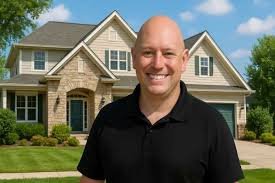
Rural housing loan programs, led by USDA’s zero-down guaranteed loan, have a reputation as farm-country financing. In practice, eligibility is drawn by address, and some suburban-edge and outlying parts of the greater Richmond region have qualified. Most of Short Pump itself, with Short Pump Town Center, West Broad Village and Green Gate at its core, is likely not eligible. That makes this a strategy question more than a hype question: check the address, run the numbers, and pivot when the answer is no.
Duane Buziak walks Short Pump and Henrico buyers through seven ways to use these programs, from checking property eligibility first to pairing them with down payment help, so you can weigh them against FHA, VA and conventional options.
Written by Duane Buziak, NMLS #1110647 | Coast2Coast Mortgage LLC NMLS #376205
1. Check Property Eligibility Before Falling in Love With a House
The USDA Section 502 Guaranteed Loan looks at two separate things: whether the buyer’s income fits, and whether the property sits in a designated rural area. The second test follows the address, not the buyer. A buyer with perfect credit and a modest income still cannot use USDA on an ineligible home, so the map has to come before the showing.
Consider an illustration. A buyer tours a Short Pump home near Deep Run High School, loves the layout, and only then learns the address is not eligible. Now they are emotionally attached to the wrong house. A buyer who checked first would have redirected to a similar home in an eligible outlying area, or kept the Short Pump home and switched to FHA paired with Dynamo DPA.
Put it into practice with these steps:
- Open the USDA Rural Development property eligibility tool and enter the full street address of every home on your shortlist.
- Run the check again before you write an offer, since map designations are updated periodically.
- Send the address to Duane Buziak to confirm the result before you commit.
The common mistake is assuming that a neighboring address, or a house in the same subdivision, shares the answer of the one you already checked. Eligibility boundaries can cut through a neighborhood, so each address needs its own check. Our Virginia USDA loan eligibility guide explains how the map applies in Henrico County.
To measure it, track the share of shortlisted homes confirmed eligible before the first showing. The goal is 100 percent of USDA-targeted tours.
2. Use the USDA Guaranteed Loan for Zero Down Payment
The mechanism is a federal guarantee. USDA backs a portion of the loan made by a participating lender, which lets eligible buyers finance 100 percent of the purchase price. Details are on the USDA Single Family Housing Guaranteed Loan page. The trade-off is fees: an upfront guarantee fee, which buyers commonly finance into the loan, and an annual fee built into the monthly payment. As of the most recent fee schedule, these have been 1 percent upfront and 0.35 percent annually, but confirm current figures before relying on them.
Here is an illustration with an assumed 6.25 percent rate, which is not a quote. On a $380,000 eligible home financed at 100 percent, the down payment is $0. The 1 percent guarantee fee adds $3,800, making the loan $383,800. Principal and interest on a 30-year fixed loan comes to about $2,363 a month, and the annual fee adds roughly $112, for about $2,475 before taxes and homeowners insurance.
The steps run in order:
- Gather two years of income documents: tax returns, W-2s and recent pay stubs.
- Run a soft-pull pre-approval so you know where you stand.
- Get a contract on a property confirmed eligible.
- Have your broker submit the file to a USDA-participating lender.
The pitfall is estimating the payment from principal and interest alone and forgetting both fees. Many buyers also assume low credit is no obstacle; credit guidance varies, and many lenders look for scores around 640 for smoother processing, so ask about current requirements. For a fuller walkthrough, see our USDA rural housing loan guide.
To measure it, compare your total monthly payment with an FHA quote on the same home. In the example above, the same $380,000 home under FHA at 3.5 percent down lands at roughly $2,465 a month on these assumptions, so the USDA advantage is mostly the $13,300 you do not need for a down payment.
3. Qualify Under the Household Income Limit Correctly
USDA is often described as a program for the lowest earners, which is wrong. The limit is roughly 115 percent of the area median income, adjusted by household size, so many two-earner households fall under it. The catch is that USDA counts income from every adult in the household, not just the people on the loan, and then allows specific deductions.
Imagine a two-earner couple whose combined gross income sits slightly above the published limit for Henrico County. After documenting deductions for dependents, their adjusted income drops under the cap and they qualify. Without that paperwork, they would have written USDA off.
To test your own household:
- List every adult living in the home, including relatives who are not borrowers.
- Total their gross annual income.
- Subtract the deductions USDA allows, such as dependent and certain childcare or medical expenses, with documentation.
- Compare the adjusted figure with the current limit for Henrico County and your household size, which Duane Buziak can pull for you.
The mistake runs both ways. Counting only the borrowers’ income can make a household look eligible when it is not, and forgetting the allowed deductions can make an eligible household look over the cap. Neither error is safe to discover at underwriting. The USDA loan eligibility requirements for 2026 lay out the income test in more detail.
To measure it, calculate your adjusted household income as a percentage of the published limit. If you land near 100 percent, small changes in a deduction or a bonus can flip the answer, so bring documents early.
4. Buy Outside the Short Pump Premium with a Rural-Eligible Address
With the Short Pump median price reported around $520,000 to $527,000 (see the Redfin market data for ZIP 23059), location carries a price. Trading some proximity for an eligible address can remove the down payment and shrink the monthly payment at once.
Here is illustrative math at the same assumed 6.25 percent rate, excluding taxes and insurance. A $520,000 home with FHA at 3.5 percent down needs $18,200 at the start. Counting the 1.75 percent upfront premium financed in, the loan is about $510,582, and with principal, interest and annual mortgage insurance the payment is roughly $3,975. A $400,000 USDA-eligible home at $0 down, with the guarantee fee financed, produces a loan near $404,000 and a payment of about $2,605. That is a gap of roughly $1,370 a month plus the $18,200.
The common mistake is comparing only the down payment. Commute time, property taxes and school zones matter just as much. A Short Pump address may feed into Pocahontas Middle or Nuckols Farm Elementary zones that matter to your family, and an outlying county will have different zones and tax rates. If zero down is your priority, these no down payment mortgage programs show what else is available to Henrico County buyers.
To compare fairly, do this:
- Build one column per option showing cash to close, monthly payment, and one-way commute.
- Use a verified current rate, noted with an “as of” date.
- Add the local tax rate and the school assignment for each address.
Measure cash to close and monthly payment per option. If the savings are real but the commute costs you an hour a day, the numbers have told you something useful.
5. Stack Down Payment Assistance and Seller Concessions
Seller concessions are the simplest way to cut cash at closing. A seller agrees in the contract to pay part of your closing costs, and the amount comes off what you bring to the table. Down payment assistance (DPA) can add a second layer, but only if the specific program permits it.
For example, imagine a 3 percent seller concession on a $400,000 home. That is $12,000 toward closing costs. Paired with a USDA loan that already needs no down payment, it can leave the buyer bringing little beyond earnest money and prepaid items, which is the idea behind no-out-of-pocket closing options. USDA guidelines cap concessions as a percentage of the price, and concessions cannot exceed the actual costs they cover, so confirm limits before you write the offer.
Here is how to set it up:
- Ask Duane Buziak which DPA layers with USDA and which pairs only with FHA or conventional, including Dynamo DPA and Turbo DPA.
- Write the concession into the offer, not into a side agreement.
- Have the underwriter confirm the concession limit before the appraisal comes back.
The classic error is assuming every DPA works with every program. Assistance products have their own rules about loan type, occupancy and borrower income, and a mismatch found late can cost you the deal. Our roundup of down payment assistance programs compares the options side by side.
To measure it, calculate the cash needed at closing after concessions and assistance, and compare it with the same figure before. Anything that does not shrink that number is not doing the job.
6. Protect Your Credit with a NoTouch Credit Pull Pre-Approval
Several hard inquiries can nick a score, and shopping for programs can invite them. A NoTouch Credit Pull lets you see how USDA, FHA, VA and conventional options fit your profile first. Duane Buziak, as a soft pull mortgage broker, can run this review, and you authorize a hard inquiry only at application.
In practice, imagine a buyer who compares USDA and FHA with a soft credit pull mortgage review. Both programs look workable. The buyer picks USDA for a specific eligible address, and only then authorizes the hard pull needed for underwriting. The score is never touched during the exploration phase.
The common mistake is letting several retail lenders each run a hard inquiry in the same week. Scoring models often treat mortgage inquiries within a short window as one, but not every model or lender does, and guessing is unnecessary when an alternative exists.
You have a few terms to look for when shopping: a no hard inquiry mortgage pre approval, a mortgage pre approval without hard pull, and a no credit hit mortgage application are all describing the same idea of testing fit before committing. Pairing this step with steps to improve your credit score for a home loan can strengthen your profile before you apply.
- Request a NoTouch Credit Pull from Duane Buziak.
- Review the program options and estimated payments it produces.
- Authorize the hard pull only when you move to a full application.
Measure the number of hard inquiries before you choose a program. The target is zero.
7. Compare USDA Against FHA, VA and Conventional Before Choosing
Zero down is attractive, but it is one line of a cost sheet. The right test is total cost over the years you expect to own the home, plus cash to close. A veteran, for instance, usually finds that VA’s no-down option beats USDA, since VA has no monthly mortgage insurance and no income cap. A non-veteran whose household income exceeds the USDA limit will find FHA fits better, and the HUD FHA loan overview explains how it works. Our comparison of the best mortgage programs available and the Short Pump VA loan guide can help you weigh the options.
Build the comparison with the same home price and credit profile across all four programs. The table below summarizes the structural differences.
| Program | Minimum down payment | Income cap | Mortgage insurance or fees | Location rule |
|---|---|---|---|---|
| USDA Guaranteed | $0 | About 115% of area median income | Upfront guarantee fee plus annual fee | Property must be in an eligible rural area |
| FHA | 3.5% (typical, with qualifying credit) | None | Upfront and annual mortgage insurance premium | None |
| VA | $0 for eligible veterans | None (residual income test) | VA funding fee, with exemptions | None |
| Conventional | 3% to 5% typical | Varies by program | Private mortgage insurance, removable later | None |
| Duane Buziak, broker | Shops all four | Checks every limit for you | Compares total cost side by side | Confirms the address, accesses 500+ wholesale lenders |
Loan size also matters. FHFA set the 2026 conforming loan limit at $806,500 for most areas, and $1,249,125 in high-cost areas, which tells you which side of the conventional line a purchase falls on.
The mistake is choosing USDA only because it says zero down. Run each program and look at the five-year and ten-year cost. Measure total cost over your expected stay, plus cash to close.
How a Broker’s Approach Differs From Retail Lenders
A retail lender offers its own products and its own rate sheet. Duane Buziak is a broker with access to more than 500 wholesale lenders, so the same buyer can be compared across USDA, FHA, VA and conventional options without being steered to one house product. That matters most for rural programs, where only some lenders participate in USDA and overlays differ. Structural differences are the point here, not claims about any single company: a broker compares, a retail lender sells what it has.
Short Pump and Henrico Rural Housing Loan Questions
Is Short Pump eligible for USDA rural housing loans?
Most of Short Pump is likely not eligible, but eligibility is decided address by address on the USDA map. Check each property before touring, and Duane Buziak can confirm it.
How much do I need to put down on a $520,000 home in Henrico County?
FHA requires as little as 3.5 percent down, which is $18,200 on a $520,000 home, and conventional can start at 3 percent. USDA would require $0 down but only if the address is eligible.
Can I get a mortgage in Short Pump with a soft credit pull?
Yes, you can start with a soft pull. Duane Buziak offers a NoTouch Credit Pull so you can see program fit before any hard inquiry.
What is the 2026 conforming loan limit for Henrico County VA?
The 2026 baseline conforming limit is $806,500, with a high-cost limit of $1,249,125 in designated areas. Henrico is covered by FHFA’s published schedule, so confirm the county figure with your broker.
What down payment assistance programs are available in Short Pump VA?
Dynamo DPA and Turbo DPA are among the options Duane Buziak offers. Which one layers with USDA, FHA or conventional depends on the specific program rules.
Can I buy a home in Short Pump with a 500 credit score?
VA loans can go down to a 500 FICO through Duane Buziak, though USDA, FHA and conventional have higher expectations. Eligibility depends on the program and overall profile.
What are closing costs on a home purchase in Short Pump VA?
Closing costs vary by loan size and program, and can often be offset by seller concessions to create no-out-of-pocket closing options. Ask for a loan estimate on your specific scenario.
How does a Short Pump mortgage broker differ from a retail bank?
A broker compares many wholesale lenders, while a retail bank offers its own products. That comparison is how Duane Buziak checks USDA against FHA, VA and conventional for your numbers.
Two Free Checks to Run Before Anything Else
Start with strategy 1, the address check, and strategy 6, the soft pull pre-approval. Both cost nothing and they decide everything else: the address tells you whether USDA is even available, and the NoTouch Credit Pull shows where your credit and income land before a hard inquiry. Then use the comparison in strategy 7 to pick the program, and only after that layer on the income test and the assistance and concessions.
Ready to find the right mortgage solution for your Short Pump area home? Connect with our local mortgage experts today for personalized guidance and access to multiple lenders who compete for your best rate. Short Pump Mortgage by Duane Buziak is ready when you are.