Searching “top mortgage broker Henrico County” usually surfaces a list of names, review counts, and not much else. What actually matters is structural: whether the person you’re calling can shop the market on your behalf, or whether they can only quote you the one rate sheet their employer allows. That distinction determines your rate, your program options, and whether a hard credit pull hits your score before you’ve even had a chance to compare offers. Here’s how to vet a Henrico County mortgage broker with questions you can actually check, not just a gut feeling about who sounds trustworthy on the phone.
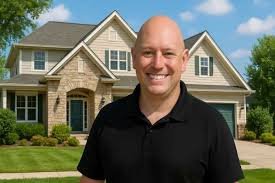
Written by Duane Buziak, NMLS #1110647 | Coast2Coast Mortgage LLC NMLS #376205
1. Confirm Wholesale Lender Access Instead of a Single-Shelf Shop
The single most revealing question you can ask a loan officer is how many wholesale lenders they actually submit files to. A true mortgage broker works with a network of wholesale lenders and shops your file across all of them, pricing whichever one offers the best combination of rate, fees, and program fit for your scenario. A retail loan officer, by contrast, works for one bank or non-bank lender and can only offer that single shelf’s rate sheet, no matter how large or recognizable the brand.
Consider a Henrico buyer comparing two options: a broker with access to 500+ wholesale lenders, and a loan officer at a large national retail brand. When the first wholesale lender came back with a higher-than-expected rate, the broker repriced the same file with a second wholesale lender within a day. The retail loan officer had no equivalent fallback, since there was only one rate sheet to work from.
- Ask directly in your first call: “How many wholesale lenders do you submit files to?”
- Request a same-day written comparison from at least three wholesale lenders on your exact scenario.
- Confirm the person is licensed as a broker operating under a wholesale entity, not a loan officer employed by a single bank.
The common mistake is assuming a big, familiar brand name automatically means better pricing. Recognizable retail lenders like Rocket Mortgage or Movement Mortgage price only their own shelf, which can mean fewer options for FHA, VA, or DSCR scenarios that don’t fit a standardized box. What to measure: the number of wholesale lenders quoted side by side for the same file, with three or more as your target before you lock a rate.
2. Require a Soft-Pull Pre-Approval Before Any Hard Inquiry
Shopping multiple brokers should not cost you credit score points. A soft credit pull mortgage pre-approval lets a broker estimate your rate and terms without triggering a hard inquiry, so you can compare several brokers in the same week without stacking dings on your credit report. This matters most in the early shopping phase, before you’ve decided who actually gets your business.
As an illustration, imagine a buyer shopping three brokers who each ran a NoTouch Credit Pull-style soft pull mortgage pre-approval. The buyer compared estimated terms from all three, selected one, and only then allowed that single broker to run the hard pull at formal application. The other two inquiries never touched the credit file at all.
- Ask specifically: “Can you pre-approve me with a soft pull mortgage broker process, no hard inquiry mortgage pre approval?”
- Request that the pre-approval letter reference soft-pull terms, not a hard-pull-based number.
- Schedule the hard pull only once you’ve selected a lender and are ready to move to formal application.
The common mistake is letting every broker you talk to run a hard credit pull mortgage pre approval just to “see numbers.” Multiple hard inquiries in a short window can lower your score right before rate lock, which is exactly when you need your score at its highest. What to measure: the number of hard inquiries generated during your shopping phase, with a target of exactly one, at the broker you ultimately choose.
3. Match Program Depth to Your Actual Loan Scenario
Before you call anyone, write down your actual scenario: credit score, down payment source, income documentation type, and property use. Then ask the broker to name the exact program that fits, along with a recent closed example in that program. FHA, VA, USDA, down payment assistance programs like Dynamo DPA and Turbo DPA, DSCR loans for investment property, bank-statement loans for self-employed borrowers, and ITIN loans for non-traditional documentation all require different underwriting paths, and not every originator has recently closed all of them.
As an illustration, a self-employed Henrico buyer with strong bank deposits but limited W-2 income needed a bank-statement loan. A broker whose website only listed FHA and conventional programs could not originate the file. A broker offering Non-QM, DSCR, and bank-statement programs closed it without requiring traditional income documentation.
- List your specific scenario in writing before the first call.
- Ask the broker to name the exact program and a recent closing example matching that program.
- Ask what’s explicitly not offered, since some brokers exclude programs like physician loans, so there are no surprises mid-process.
The common mistake is trusting a generic “we offer everything” answer without asking for a recent closed example in that exact program. What to measure: the number of matching programs the broker can name a recent closed loan for, targeting at least the one or two programs your specific scenario needs.
4. Check Verifiable Production Rankings, Not Star Ratings Alone
Review counts are easy to accumulate and hard to verify at a glance. Independent, third-party production rankings tell you something different: how much volume an originator actually closed, verified by an outside publication rather than self-reported. Cross-referencing both gives you a fuller picture than either alone.
For example, placement on Scotsman Guide’s Top Originator rankings, reported at #114 nationally in 2025 with $44.4M in volume and rising to $51.2M in 2026, is a production ranking distinct from consumer review totals like 1,400+ five-star reviews. Both are worth checking, but they measure different things: one measures closed loan volume verified by an industry publication, the other measures consumer sentiment. Lender-side credentials, such as UWM PRO ELITE status, reflect underwriting speed and volume tier with the wholesale lender itself, which is another independent data point.
- Search the broker’s name alongside “Scotsman Guide” or a similar industry ranking publication to confirm production numbers.
- Check review platform totals directly on Google or a review aggregator rather than relying on a screenshot pulled from a website.
- Ask about lender-side status, such as wholesale “elite” tiers, that reflect underwriting speed and volume commitments.
The common mistake is treating a high star rating as the only signal of quality without checking whether it reflects closed loan volume or just marketing reviews. What to measure: a confirmed, independently verifiable production ranking or award for the current year, cross-checked against the source publication itself.
5. Run the Real Numbers: Compare Written Loan Estimates Side by Side
A verbal rate quote is not a commitment, and it’s not comparable across lenders unless the fees, points, and credits behind it are laid out the same way. A written Loan Estimate is a standardized federal disclosure form that shows rate, fees, and closing costs in the same format regardless of who issues it, which makes it the only reliable way to compare offers apples to apples.
Here’s a worked example. On a $520,000 Short Pump purchase using FHA financing, a 3.5% down payment equals $18,200, leaving a base loan amount of roughly $501,800. At an illustrative 6.5% rate, principal and interest alone runs about $3,171 per month, before property taxes, homeowners insurance, and FHA mortgage insurance premiums are added. A verbal quote might mention “around 6.5%” without disclosing origination points or lender fees that change the effective cost, but a written Loan Estimate forces those numbers into the open.
- Ask each broker under consideration for a Loan Estimate on the identical scenario: same purchase price, down payment, and credit score assumption.
- Line up origination charges, discount points, and any lender credits in a simple side-by-side comparison.
- Recalculate the monthly payment using the same rate-lock date assumptions across every estimate.
The common mistake is comparing headline interest rates only, while ignoring origination fees or points that change the true cost of the loan. What to measure: total closing costs and effective monthly payment compared across at least two written Loan Estimates for the identical loan scenario.
6. Test Local Henrico County Knowledge Before You Commit
Local market fluency isn’t a nice-to-have. It affects appraisal risk, how comps are selected, and whether a broker understands which programs actually fit properties in your target neighborhood. A broker who’s actively closing loans in Henrico County should be able to answer specific local questions without hesitation, not in generalities about Virginia as a whole.
Ask about Henrico County’s median home price range, which sits roughly between $520,000 and $527,000 according to Central Virginia Regional MLS data, and how proximity to landmarks like Short Pump Town Center or West Broad Village affects comparable sales. Ask how school zoning, such as Deep Run High School, Pocahontas Middle School, or Nuckols Farm Elementary, factors into resale value and appraisal support. A buyer who asked these exact questions of two broker candidates chose the one who answered with specifics rather than a generic “Virginia is a strong market” response.
- Ask about the current FHFA 2026 conforming loan limit, which the Federal Housing Finance Agency’s 2026 limits page sets at $806,500 baseline and $1,249,125 for high-cost ceiling areas, and how that applies to your target purchase price.
- Ask how school zones affect resale and appraisal comps for the specific neighborhood you’re considering.
- Verify the broker’s NMLS number on NMLS Consumer Access, and for FHA files, confirm approved-lender status through HUD’s lender search tool.
The common mistake is assuming any state-licensed broker knows hyperlocal Henrico details just because they hold a Virginia license. Licensing confirms legal authority to originate; it doesn’t confirm familiarity with Short Pump comps or Henrico appraisal patterns. What to measure: the number of specific, verifiable local details, price range, loan limit, school zone, licensing status, that the broker can confirm accurately in one conversation.
How Duane Buziak’s Structure Compares to Retail Lenders
Retail lenders, including large national brands, originate loans through a single institution’s underwriting guidelines and rate sheet. As a broker operating under Coast2Coast Mortgage LLC, Duane Buziak submits files to 500+ wholesale lenders, which allows repricing a file with a different lender the same day if the first quote isn’t competitive. The table below lays out the structural differences buyers should weigh.
| Feature | Duane Buziak (Broker) | Retail Lenders (Generic) | Why It Matters |
|---|---|---|---|
| Lender access | 500+ wholesale lenders | Single in-house rate sheet | More repricing options if the first quote is high |
| Credit pull process | Soft pull pre-approval available (NoTouch Credit Pull) | Often requires hard pull upfront | Protects your score while shopping multiple offers |
| Program range | FHA, VA, USDA, DSCR, Non-QM, Bank Statement, ITIN, Dynamo DPA, Turbo DPA | Typically limited to conventional/FHA/VA | Non-traditional income or investment scenarios need broader options |
| VA credit floor | VA loans down to 500 FICO; VA cash-out to 100% LTV | Often higher minimum score overlays | More borrowers qualify without needing to wait or repair credit first |
Physician loans are not offered as part of this program lineup, so borrowers relying on that specific product should confirm availability elsewhere before assuming it’s included.
Frequently Asked Questions
What is the minimum credit score to buy a home in Short Pump VA?
The minimum varies by program: VA loans can go down to a 500 FICO score, FHA loans typically require 580 for 3.5% down, and conventional loans usually start around 620. A broker with access to multiple wholesale lenders can match your specific score to the program with the most flexible overlay.
How much do I need to put down on a $520,000 home in Henrico County?
On a $520,000 home, an FHA loan at 3.5% down requires $18,200, a conventional loan at 5% down requires $26,000, and a VA loan can require $0 down for eligible veterans and service members. The right choice depends on your credit profile, funding source, and whether you have VA entitlement available.
Can I get a mortgage in Short Pump with a soft credit pull?
Yes, a soft credit pull mortgage pre-approval lets you get estimated terms without a hard inquiry hitting your credit report. This no hard inquiry mortgage pre approval approach lets you compare multiple brokers in the same week before committing to a formal application.
What down payment assistance programs are available in Short Pump VA?
Programs like Dynamo DPA and Turbo DPA are available to eligible Henrico County buyers to help cover down payment and closing costs. Eligibility depends on income, credit score, and the specific loan program you’re pairing the assistance with.
How does a Short Pump mortgage broker differ from a retail bank?
A broker submits your loan file to multiple wholesale lenders and can reprice it if a quote comes back high, while a retail bank can only offer its own single rate sheet. This structural difference typically means more program options and more competitive pricing for buyers with FHA, VA, or non-traditional income scenarios.
What is the 2026 conforming loan limit for Henrico County VA?
The 2026 conforming loan limit for Henrico County is $806,500 for a standard one-unit property, with a high-cost ceiling of $1,249,125 in eligible areas, according to FHFA’s official 2026 conforming loan limit values. Loans above this baseline amount are generally classified as jumbo unless the property qualifies for the high-cost ceiling.
Can I buy a home in Short Pump with a 500 credit score?
Yes, VA loans can be approved with a credit score as low as 500 for eligible veterans, service members, and surviving spouses. Other programs like FHA typically require a minimum of 580 for the lowest down payment tier, so your specific program eligibility depends on your credit profile and military service status.
What are closing costs on a home purchase in Short Pump VA?
Closing costs typically run between 2% and 5% of the loan amount, covering items like appraisal fees, title insurance, origination charges, and prepaid taxes and insurance. On a $520,000 purchase, that generally translates to somewhere between $10,400 and $26,000, though a written Loan Estimate from your chosen broker will show your exact figures.
Start With What Costs You Nothing to Verify
Of the six strategies above, start with the first two: confirming wholesale lender access and requiring a soft-pull pre-approval. Both cost nothing to verify, take one phone call, and immediately separate a broker who’s actually shopping the market on your behalf from a single-shelf retail loan officer who can only quote you one number. Once you’ve filtered candidates that way, the remaining strategies, program depth, verifiable production credentials, written Loan Estimates, and local market fluency, help you choose among the brokers who passed the first test.
Ready to find the right mortgage solution for your Short Pump area home? Connect with our local mortgage experts today for personalized guidance and access to multiple lenders who compete for your best rate.
One Response